
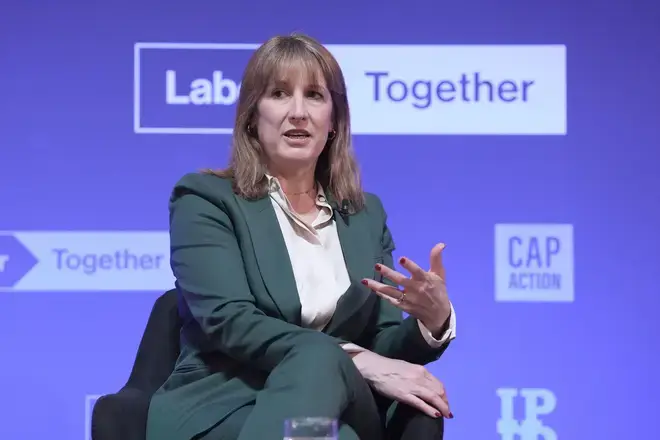
The Confederation of British Industry told Reeves would risk "stalling" her drive for economic growth if she embarks on another tax raid on business.
Ahead of the November 26 fiscal event, the Confederation of British Industry told Reeves would risk "stalling" her drive for economic growth if she embarks on another tax raid on business.
Ms Reeves hit firms with an increase in national insurance contributions last year but is set to deliver another tax-raising Budget on November 26.
She could choose to rip up Labour's manifesto promise not to increase income tax to help balance the books.
CBI chief executive Rain Newton-Smith said: "Sticking rigidly to manifesto commitments may be politically laudable, but it is only economically viable if material conditions remain unchanged.
"The fact is they are not. Tax rises and spending cuts are unpopular, but the reality is that the Chancellor faces little choice.
"We need to make sure that these measures are fair, broad-based and have a laser-like focus on raising investment, growth and productivity for the long-term."
Elsewhere, former Labour Prime Minister Sir Tony Blair's think-tank has echoed the calls saying any major tax rises imposed by Ms Reeves must be "temporary" and coupled with reforms to help businesses "bruised" by the last Budget.
A report from the Tony Blair Institute (TBI) called on the Chancellor to bring businesses "back onside" by moving beyond "the caution of the Government's first year in office" in her November 26 Budget.
Ms Reeves has fuelled expectations that she will announce higher taxes by refusing to commit to maintaining Labour's manifesto promises not to hike income tax, national insurance or VAT.
The TBI said this must be accompanied by bold growth-boosting pro-business reforms that "break Britain's tax-and-spend doom loop" and allow the Government to roll back the tax rises as the economy improves.
It rejected the Government's proposal of giving workers "day one" protection against unfair dismissal, recommending instead a six-month qualifying period.
In its paper, the TBI backed "decisive" action such as hiking a major revenue-raising levy instead of more incrementalism that "creates pain but rarely momentum".
"If the Chancellor opts for a larger revenue-raising step – particularly a manifesto-breaching increase in income tax or value-added tax (VAT) – she should make clear that it is temporary and conditional: a short-term measure to stabilise the public finances, not a permanent shift in direction," the TBI said.
Once growth strengthens and public service reforms deliver results, taxpayers should see "targeted tax cuts before the election".
Ms Reeves should announce a "big initial wave of pro-business reforms" at the Budget, the TBI argued.
Welcome reforms already implemented by ministers, such as in planning, have often been "offset" by "contradictory measures" elsewhere such as the rise in employer national insurance.
"Businesses, still bruised by last year's tax increases, want a clear signal that the Government will prioritise enterprise, stability and delivery," the Labour former prime minister's think tank said, adding that the Chancellor must "chart a course to national renewal" that brings them "back onside".
"Achieving that will require tough, politically costly decisions that signal a clear change in direction and a move beyond the caution of the Government's first year in office."
The TBI warned that planned changes to migration policy and employment rights risk damaging the UK's flexible jobs market.
It urged ministers to retain the five-year route to permanent settlement for the skilled worker visa, instead of requiring migrants to spend a decade in the UK before being able to apply.
