
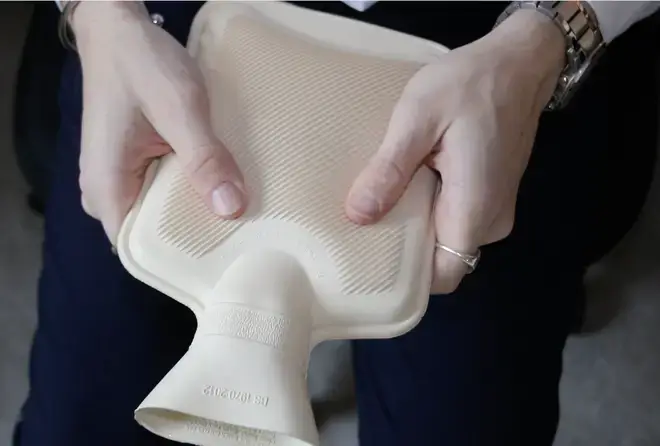
New data shows the number of people hurt by the bottles has doubled in the past five years.
Figures shared exclusively with LBC by the Children’s Burns Trust and the International Burn Injury Database (IBID) reveal that burns from hot water bottles rose by 11 per cent in the last year alone, and have now reached around 1,000 incidents annually: the highest number recorded in more than two decades.
Across England and Wales, children have been the hardest hit, with a 110 per cent increase in cases since 2022.
Adult injuries rose by 14 per cent, while burns among elderly people increased by 6 per cent.
Experts say the surge is being driven by the cost-of-living crisis, with many families and students using hot water bottles instead of turning on their heating as temperatures drop.
For 19-year-old student Roni Bent, what began as her usual method of dealing with period cramps turned into a life-changing accident as she scalded her lower torso and thighs.
“I filled up a hot water bottle with boiling water and tucked it down my jeans,” she told LBC. “I screamed, and I didn’t realise what had happened at first. My jeans were wet, and when I looked down the skin was just gone. It had gone grey.”
Roni, a first-year student who had just begun studying at the University of Nottingham, was rushed to hospital and later told she may need a skin graft.
“I’ve used that hot water bottle for six years and had no idea they had expiry dates” she said. “It had actually ripped, not just the lid coming off, like I thought. All of our hot water bottles at home are now in the bin.”
The burn has forced Roni to pause her studies until the new year while she recovers at home in Stoke-on-Trent. “It’s just not worth it” she said. “I’ll never use one again.”
At Nottingham’s specialist burns unit at The City Hospital, Senior Nurse Mary Kennedy says her team has seen a dramatic increase in patients arriving with hot water bottle burns, particularly since winter 2022 – including babies and toddlers who'd been put into their cot with a hot water bottle.
“Nationally and locally, we’ve seen a real increase” she told LBC. “There’s been about a 55 per cent rise in injuries to children here, and overall about a 12 per cent increase, with adult injuries up by roughly 40 per cent.”
Most patients, she explains, are scalded because of boiling water soaking through their clothing: “People often pour boiling water straight from the kettle into a hot water bottle. That’s far too hot, and when it leaks or bursts, it causes deep scalds.”
Nurse Kennedy says burns are assessed by size and depth, with some patients requiring skin grafts if wounds don’t heal within two weeks.
Her key first aid advice if you are burnt by a hot water bottle is to follow the “three Cs”: “Cool the burn with running water for 20 minutes, call for help, and cover it with cling film or a clean cloth.”
She also urges people to check the ‘flower date’ symbol stamped on every hot water bottle to see when it was made. “Don’t use one that’s more than two years old” she warns. “You can tell by the dots around the flower. Each dot marks a month of the year.”
Ms. Kennedy says novelty designs and the popular XL hot water bottles are also proving dangerous: “Some of the new styles hold up to two litres of water. If those burst, the injury can be devastating.”
Retired burns surgeon Dr Ken Dunn, who is also the Vice Chair of the Children’s Burns Trust and Medical Director of iBID, says the trend is “deeply concerning, but sadly predictable.”
“We’re seeing more people in deprived urban areas and students in poorly heated accommodation resorting to hot water bottles to stay warm” he told LBC. “That’s clearly linked to cost-of-living pressures.”
Dr. Dunn says half of all recorded injuries are caused by spilling boiling water while filling the bottle, and the other half by the rubber perishing and splitting.
“We’ve even come across bottles so old they predate modern safety standards” he said. “If you must use one, test it with cold water first: squeeze it, check for cracks, and never overfill it.”
He added: “I’ve always regarded them as unsafe objects. I don’t use one myself, and I never will.”
With energy prices still high, doctors acknowledge that many people will continue turning to hot water bottles for comfort, but they stress precautions could prevent a serious injury.
“Use warm, not boiling water” Kennedy said. “Check the date and replace them every couple of years. And if you’re giving one to a child… just don’t. Use a microwaveable wheat bag instead.”
As temperatures drop, hospitals are bracing for more admissions. For Roni, the message is simple:
“It seems harmless, but it’s not. A hot water bottle is the last thing you expect to land you in hospital.”
The Treasury was approached for comment but declined.
