
Labour MP Clive Betts raised concerns over the level of stem cells currently being donated as he urged the Government to go further with its national cancer plan.
The new 10-year plan for England aims to use blood, urine and saliva tests – such as those able to pick up signals of more than 50 cancers before symptoms appear – to “transform and modernise” diagnosis.
Charity Anthony Nolan said it is targeting younger donors, those between 16 and 30 years old, because research shows they offer better survival rates for patients.
In the Commons, Mr Betts, who chairs the All-Party Parliamentary Group (APPG) on Stem Cell Transplantation and Advanced Cellular Therapies, pressed the Government “to go a bit further in terms of cancer for young people”.
The Sheffield South East MP said: “When I had my stem cell transplant, for myeloma, my own stem cells were used and harvested. But for many young people with complicated blood disorders, they need stem cells to be donated.
“Will she work with the Anthony Nolan trust, I’m chair of the APPG, to ensure that more young people donate their stem cells so other young people can have a life to look forward to?”
During a statement on the new plan, health minister Ashley Dalton said: “The minister for innovation is already looking at the issues he raises around blood products and donations, and is working with the Anthony Nolan trust on these and I’ll be more than happy to work with him further on those issues.”
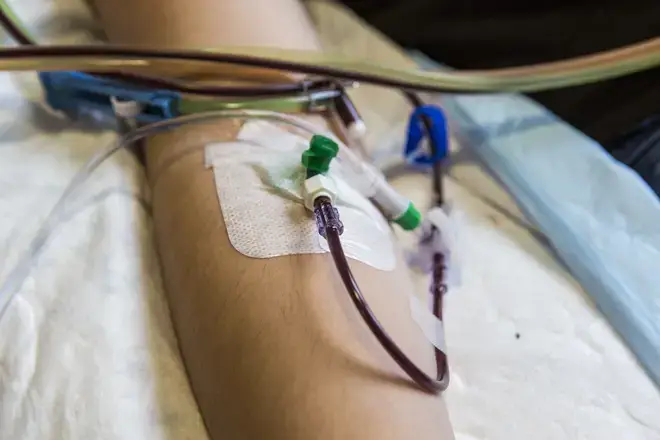
Most people who donate stem cells do so through a process called peripheral blood stem cell (PBSC) collection, which filters them out from the bloodstream.
This requires a course of injections over a few days followed by a hospital visit, which usually takes around four to five hours, according to Anthony Nolan.
The remaining 10% of donors do so through their bone marrow, with it collected from the hip bone.
Donors are placed under a general anaesthetic for this and typically stay in hospital for two nights.
Charlotte Cunliffe, director of register development at Anthony Nolan, said: “We’re so pleased and grateful to Clive Betts for shining a spotlight on the need for more people to join the Anthony Nolan Stem Cell Register.
“Research has shown that younger donors offer better survival rates for patients, which is why we lowered our recruitment age from 18 to 16 in 2012 and work in partnership with schools and universities across the country.
“Currently, only 15% of the UK Anthony Nolan stem cell register is made up of young men but they account for more than half of people called upon to donate, which clearly illustrates the difference our younger male donors make to patients facing blood cancer or blood disorders.
“We currently run successful programmes in both schools and universities but we urgently need to do more and welcome contacts to help us expand this work.”
