
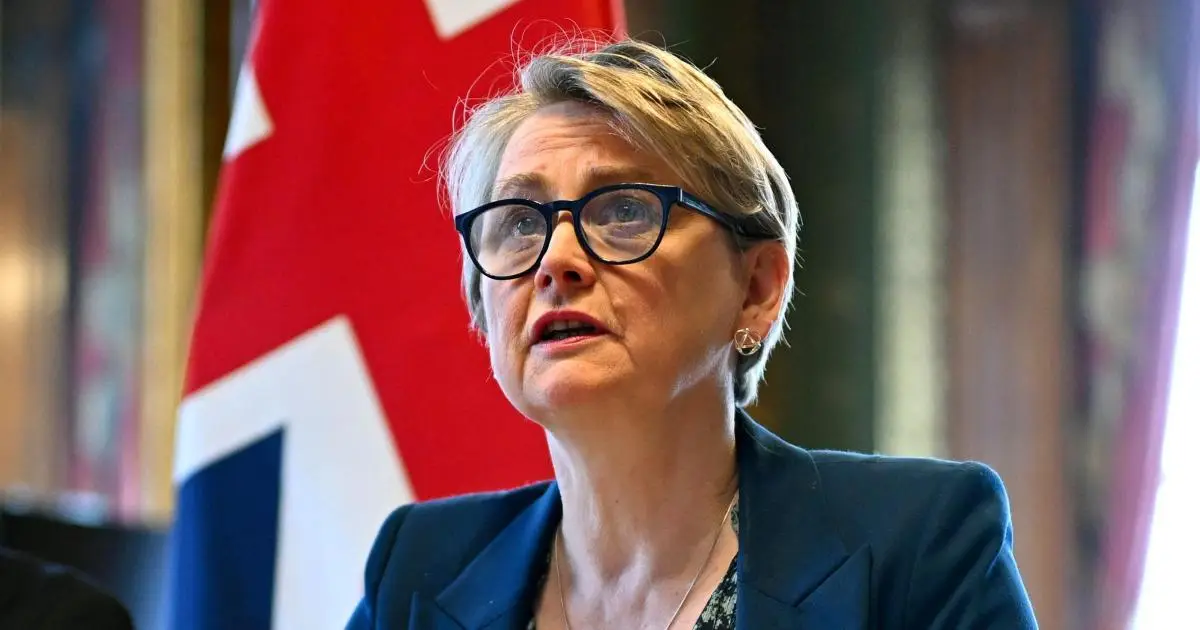
Foreign Secretary Yvette Cooper has said she is “deeply troubled” by Israel’s strikes on Lebanon and pressed for the country to be part of the Iran ceasefire deal.
It comes as Iran’s deputy foreign minister said his country sent a message to the US by closing the Strait of Hormuz again in response to Israeli attacks in Lebanon.
Ms Cooper said failing to include Lebanon in the ceasefire could “destabilise the whole region”.
Speaking on Times Radio, she said: “One of the things I do feel very strongly about is we want to see Lebanon included in the ceasefire.
“We want it extended to cover Lebanon, because otherwise that will destabilise the whole region, and also it’s just the right thing to do.
“That escalation that we saw from Israel yesterday, I think, was deeply damaging and we want to see an end to hostilities in Lebanon.”
She told Sky News: “I’m deeply troubled about the escalating attacks that we saw from Israel in Lebanon yesterday.”
The Foreign Secretary said she would be meeting with the International Maritime Organisation later on Thursday about their proposal to get some of the first ships moving through the Strait of Hormuz.
Defence Secretary John Healey will also be speaking publicly later on Thursday, she said.
She also said it was “crucial” that Iran is not allowed to apply tolls in the strait.
Sir Keir Starmer meanwhile told Gulf allies Iran must not “hold the Strait of Hormuz to ransom” in a regional defence call during a visit to Abu Dhabi.
The Prime Minister joined the call with defence representatives from countries including Qatar, Bahrain and the UAE during the second leg of his trip to Gulf countries amid signs the US-Iran ceasefire is already under strain.
He has already been to Saudi Arabia and spoken to Saudi Crown Prince Mohammed Bin Salman and is expected to meet UAE President Sheikh Mohamed bin Zayed Al Nahyan.
Sir Keir has welcomed the two-week pause in US President Donald Trump’s bombing campaign, but said it is “early days” and that more work needs to be done to restore shipping through the key route.
But that pause, which hinges on the strait reopening, appeared to be under threat as Iran closed it again on Wednesday night in response to Israeli attacks on the Hezbollah militant group in Lebanon.
The US president said in a post early on Thursday that US forces in and around Iran would stay in place until the “REAL AGREEMENT reached is fully complied with”.
Iran’s deputy foreign minister Saeed Khatibzadeh called the Israeli attacks an “intentional grave violation of the ceasefire”.
“You cannot have a cake and eat it at the same time,” he told the BBC’s Today programme on Thursday.
“That was the message that Iran sent quite clearly, crystal-clearly, to Washington and to the Oval Office last night.
“Our foreign minister also said that you cannot ask for a ceasefire and then accept terms and conditions, accept the areas that ceasefire is applied to, and name Lebanon in that – and then your ally just starts a massacre.
US vice president JD Vance has said the agreement with Iran does not include Lebanon but that there had been a “legitimate misunderstanding” on the Iranian side that it did.
Sir Keir has called for the ceasefire to be implemented in full, including in Lebanon, in a joint statement with European allies and Canada.
Talks between the US and Iran are due to take place in Pakistan this weekend, with Mr Vance and envoy Steve Witkoff to attend from the Trump administration.
Sir Keir is seeking to minimise the economic impact of the war on the UK by getting the Strait of Hormuz open again.
The US-Israeli strikes on Iran and Tehran’s response, including targeting Gulf states and effectively closing the key shipping lane, had sent fossil fuel prices soaring around the world.
The ceasefire agreement late on Tuesday triggered a fall in global oil prices.
