
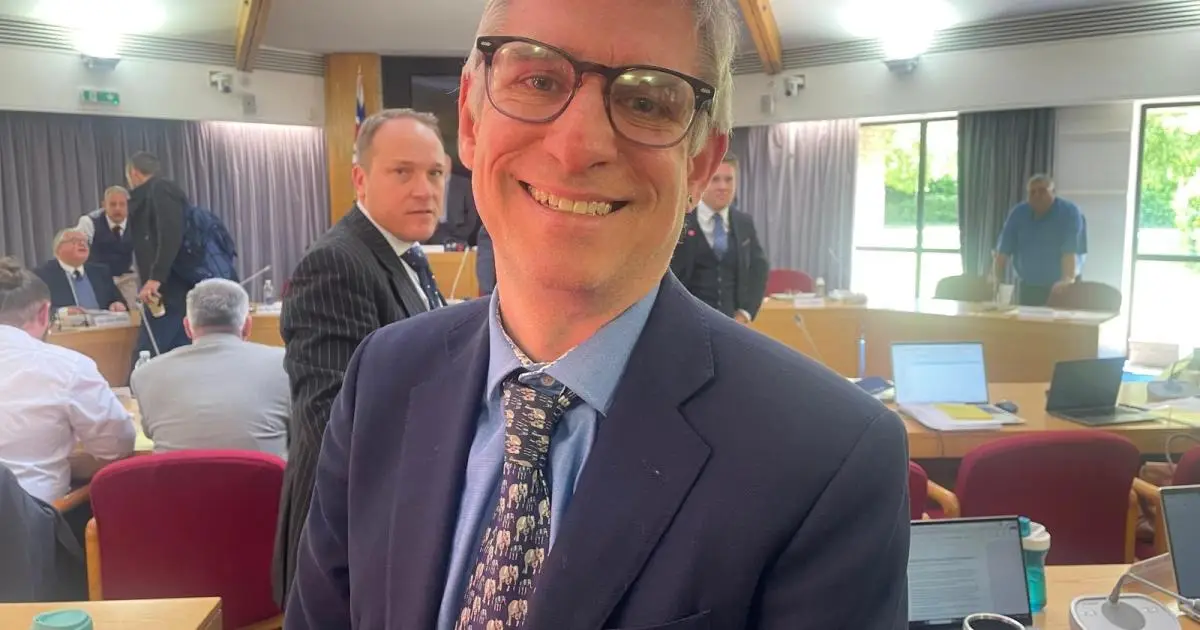
A COUNCIL leader has called on MPs to help lobby the Government for fair funding.
Matt Jenkins has urged parliamentarians to back demands for a fair local governance finance settlement ahead of the October budget.
The leader of Worcestershire County Council said its current funding model is “not sustainable” and warned it is putting vital services at risk.
Earlier this year, the Government provided the council with £59.9 million in Exceptional Financial Support (EFS) so it could set a balanced budget to meet legal obligations in areas such as adult social care and housing for vulnerable children.
PARLIAMENT: Tom Collins and other county MPs have been asked to lobby the government for better council funding (Image: Submitted)
Councillor Jenkins said: “Let’s be clear, last year’s bail out was not giving us any additional money.
“The Government merely told us to borrow more money to balance the books. This is not sustainable.
“The increased debt now means we have even more costs as we now have to pay interest on the increasing debt.”
Cllr Jenkins has now written to Worcestershire MPs Bradley Thomas, Nigel Huddleston, Chris Bloore, Dame Harriett Baldwin, Tom Collins and Mark Garnier.
In the letter, he said: “We are urging you to lobby government to adopt an immediate commitment to provide councils with sufficient funding to cover the costs of statutory responsibilities relating to the care of children and adults.”
His call is backed by the Green and Independent Alliance (GAIA) – other Green and independent councillors on the council.
Cllr Jenkins also warned that demand is rising while resources remain stretched.
Upcoming government decision ‘critical’ to Worcestershire’s financial future
Pleas for more social care cash ‘falling on deaf ears’ say council bosses
The industrial north and rural south – why Worcestershire is being split in two
He said: “The Government is asking councils to take on more responsibilities but they are not providing the money to fund those services.
“In a cost of living crisis the services we provide are more essential than ever, especially to the most vulnerable people in society.”
Rising demand and costs in adult social care are central to the council’s funding pressures.
A recent survey by the Association of Directors of Adult Social Services (ADASS) found that half of adult social care directors are “extremely concerned” about the impact of rising costs due to increasing complexity of need.
