
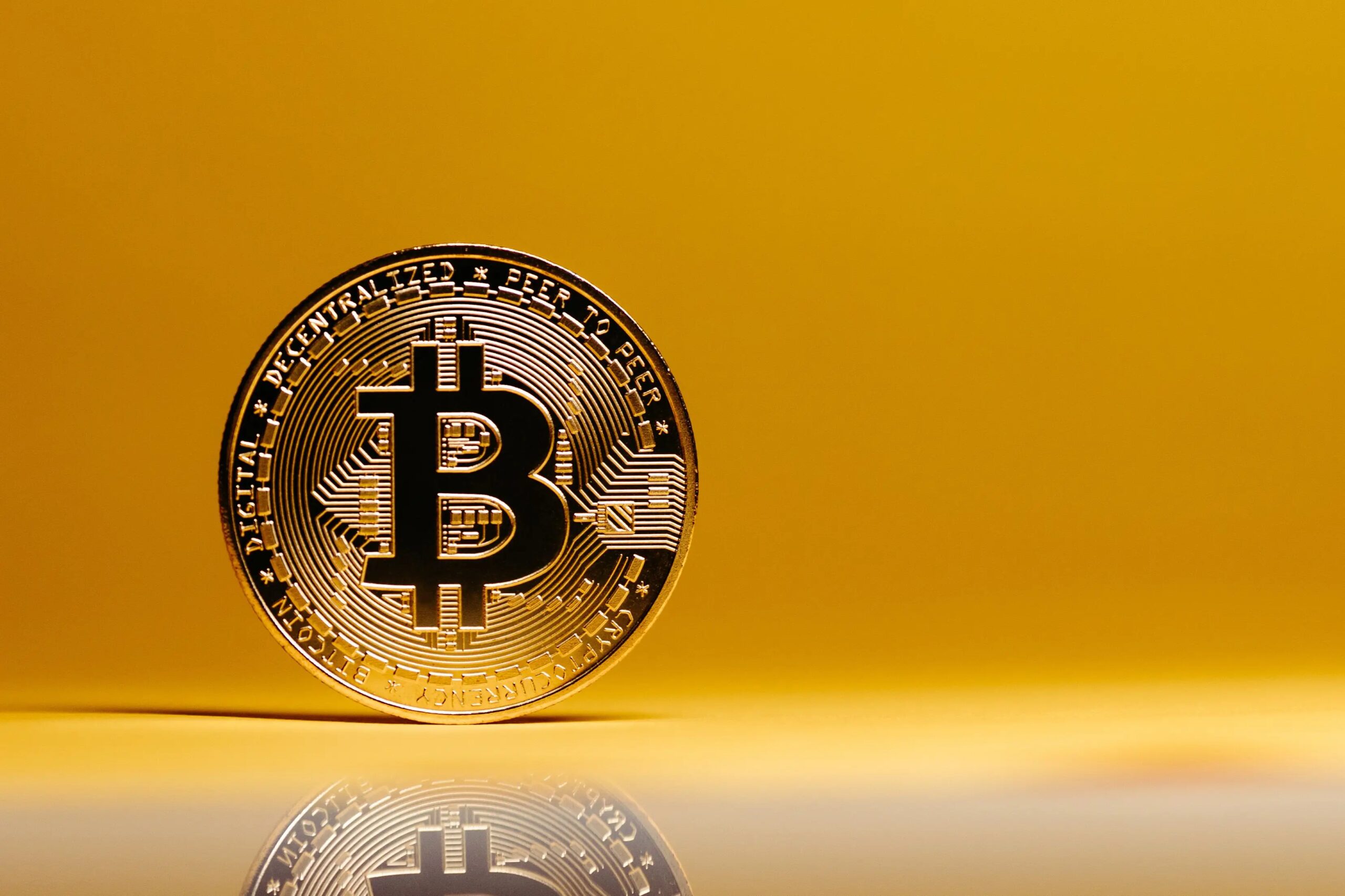
The cryptocurrency market has long ceased to be exclusively the territory of enthusiasts and retail traders. Today, professional investors, hedge funds, and companies engaged in algorithmic trading are closely monitoring the movement of digital assets. At the same time, sometimes the most interesting opportunities arise not from the movement of bitcoin itself, but from the difference in its price on different markets.
One of the most well-known examples is the so-called “Kimchi Premium.” This is the term for a situation where a cryptocurrency on South Korean exchanges trades noticeably higher than on international platforms.
At first glance, everything looks quite simple: buy bitcoin where it is cheaper, transfer it to where the price is higher, and capture the difference. It was precisely this logic that at one time attracted the attention of foreign traders, including participants in the British cryptocurrency market.
But in practice, everything is much more complicated. The difference in quotes by itself does not yet mean the presence of easy profit. Between the purchase and the sale are banking restrictions, currency controls, exchange requirements, client identification issues, fees, and, most importantly, time. Sometimes it is precisely these factors that completely eat up the premium that looks attractive at first glance.
What the “Kimchi Premium” Represents
The term appeared to describe a specific situation in the cryptocurrency market of South Korea. It became especially noticeable during the rapid growth of bitcoin in 2017, when prices on some Korean platforms significantly exceeded international quotes.
The reasons for this phenomenon cannot be reduced to a single factor.
Firstly, in South Korea, a very active audience of retail cryptocurrency investors has formed. During periods of strong growth, demand for digital assets could rapidly increase, and local liquidity did not always keep up with it.
Secondly, the Korean market is to a certain extent isolated from the global financial system. The movement of capital and currency operations are regulated significantly more strictly than it might seem to a person who looks only at the bitcoin price chart.
Thirdly, the foreign and domestic markets are not completely interchangeable. Even if bitcoin is the same asset, the ability to quickly move money between platforms is by no means guaranteed.
This is precisely why the price difference can persist for some time.
It is important, however, to understand one thing: the Kimchi Premium is not a constant value. It can disappear literally over a short period or, conversely, sharply increase during market hype.
Why This Interests Investors from the United Kingdom
The interest of British traders in the Korean market is quite understandable. London remains one of the world’s largest financial centers, and the British market has a large number of specialists in quantitative trading, arbitrage, and digital asset management.
For a professional trader, the idea itself looks logical: if the same asset has different prices on two markets, a potential opportunity for arbitrage arises.
But here there is an important difference between theory and practice.
Suppose bitcoin on an international platform costs a conditional $100,000, and on a Korean one—$106,000. On paper, the difference is 6%. However, the trader needs to take into account trading fees, transfer fees, currency conversion, banking expenses, and possible delays.
In addition, a question arises that is much more complex than the price itself: can a foreign investor even carry out the entire necessary chain of operations in the required jurisdiction and at the right moment?
It is here that most of the attractiveness of the Kimchi Premium begins to disappear.
What Arbitrage Looks Like in Practice
The classic scheme looks quite obvious.
The trader acquires bitcoin on an international platform, where the price is lower. Then the asset is transferred to an accessible Korean exchange and sold there, where the price is higher.
As an example, one can imagine an international exchange like Kraken or Coinbase and a Korean platform like Upbit or Bithumb.
However, such an example rather explains the principle than constitutes a ready-made instruction for making money.
The main problem is that money and cryptocurrency must move between different financial systems. It is necessary to take into account the rules of the specific exchange, the origin of funds, the client identification procedure, restrictions on cross-border operations, and the requirements of banks.
In addition, the price can change precisely at the moment when bitcoin is in the process of being transferred.
Suppose a trader saw a premium of 7%. He bought bitcoin and sent it to the Korean exchange. If during the transfer the premium shrank to 1%, the initial opportunity has practically disappeared. If at the same time the exchange rate of bitcoin itself has changed, the result may turn out even worse.
Therefore, professional arbitrage is usually built not on manual transfer of funds after the appearance of a difference, but on a pre-prepared infrastructure and simultaneous management of positions on different platforms.
Why You Cannot Simply Transfer Money and Take the Difference
This is, perhaps, the main point that is often overlooked in popular materials about the Kimchi Premium.
If arbitrage is so obvious, a legitimate question arises: why do large market participants not eliminate the difference almost instantly?
The answer lies in the existence of barriers between markets.
If any investor could, without restrictions, transfer pounds or dollars to South Korea, buy bitcoin there, sell it, and return the money back, competition would quickly reduce the price difference.
But financial markets do not work that way.
In the case of South Korea, currency regulation, banking controls, and rules concerning operations with digital assets play a significant role. For foreign participants, the question of access to local exchanges and banking infrastructure additionally arises.
Therefore, the Kimchi Premium is not simply a “price difference,” but the result of the existence of certain market barriers.
Main Risks
The most obvious risk is the change in the price of bitcoin. But in practice, it is far from the only one.
Regulatory Risk
The rules for the operation of cryptocurrency companies and requirements for cross-border operations can change. What was technically possible yesterday will not necessarily be available tomorrow.
Particular caution should be exercised with attempts to build a business model around circumventing restrictions. Creating companies, using intermediaries, or complex payment chains does not eliminate the requirements of legislation.
Banking Risk
Even if the cryptocurrency operation technically proceeds successfully, the bank transfer can become a separate problem.
The bank may request documents on the origin of funds, the purpose of the payment, or the nature of the activity. For a large professional trader, this means the need for a pre-established compliance system.
Liquidity Risk
The price on the screen and the price at which a large volume can actually be sold are not always the same thing.
If an investor tries to execute a large transaction, the depth of the order book becomes critically important. A theoretical premium of several percent can significantly decrease already during the execution of the order.
Technological Risk
Transferring cryptocurrency between exchanges is also not an instantaneous and absolutely safe process. Delays, technical failures, restrictions on deposits or withdrawals are possible.
In a rapidly changing market, even a few minutes sometimes matter.
Fees
At first glance, a 5% or 10% difference looks impressive. But after deducting trading fees, network fees, currency conversion, banking expenses, and other costs, the result may turn out to be much more modest.
Therefore, professional traders calculate not the premium itself, but the net arbitrage return.
What Has Changed in Recent Years
The Kimchi Premium is interesting also because it shows how quickly the cryptocurrency market is changing.
In the first years of the existence of large cryptocurrency platforms, such price discrepancies could be very noticeable. With the development of infrastructure, the growth in the number of professional participants, and the strengthening of regulation, opportunities for simple arbitrage have become more complex.
This does not mean that the premium has disappeared forever.
On the contrary, during strong growth in the cryptocurrency market or a sharp increase in demand in South Korea, the price difference may reappear.
But now it is more correct to view it not as a guaranteed source of profit, but as an indicator of imbalance between the local and global markets.
And in this, in my opinion, lies the most interesting side of the phenomenon.
What the Kimchi Premium Tells Us About the Market
If you look at the situation more broadly, the Kimchi Premium shows that the cryptocurrency market is far from being as unified as it sometimes seems.
Bitcoin is a global asset, but the infrastructure around it remains local. Each country has its own banks, currencies, rules, exchanges, and restrictions.
Therefore, two platforms can show completely different prices for the same asset.
For a professional investor, this is not only a potential opportunity to make money. It is also a source of information.
A sharp increase in the premium may indicate increased demand for cryptocurrency in South Korea. A decrease in the premium, on the contrary, may indicate normalization of the market or a change in participant behavior.
That is why it is interesting today to follow the Kimchi Premium even for those investors who do not engage in arbitrage at all.
Is It Worth It for a British Investor to Try to Profit from the Kimchi Premium?
There is no clear answer here.
For a large trading company that already has a legal structure, banking relationships, access to liquidity, and an automated trading system, arbitrage between markets may be of practical interest.
For a retail investor, the situation is completely different.
If a person sees a message on the internet that bitcoin in South Korea is supposedly several percent more expensive, this does not yet mean that he can get this difference for himself.
Between the two prices lies an entire financial infrastructure.
That is why I would view the Kimchi Premium primarily as a professional arbitrage strategy, and not as a simple way to make money for any investor.
Prospects
The future of the Kimchi Premium will depend on several factors at once: the state of the cryptocurrency market, the activity of Korean investors, currency regulation, the policy of local banks, and the rules for access of foreign participants to cryptocurrency infrastructure.
If the market becomes more integrated, large price discrepancies will occur less frequently and disappear faster.
If restrictions on capital movement and a significant difference between local and international liquidity persist, such opportunities may periodically return.
For British investors, this means one thing: it is worth watching not only the bitcoin chart, but also why the price difference itself arises.
Conclusion
The Kimchi Premium is a good example of how unusual the cryptocurrency market remains.
At first glance, everything is simple: buy the asset cheaper and sell it at a higher price. But the deeper you delve into the mechanics, the more obvious it becomes that the main complexity lies not in finding the price difference, but in the ability to safely and legally carry out the entire chain of operations.
For professional investors from the United Kingdom, the South Korean market can indeed be of interest. However, here what matters more is not the size of the premium itself, but how quickly and with what costs it can be realized.
Ultimately, the Kimchi Premium is not “easy money,” but a kind of window into the structure of the global cryptocurrency market. And the wider this window opens, the more attention professional traders pay to it—and the faster the market tries to close the resulting imbalance.
