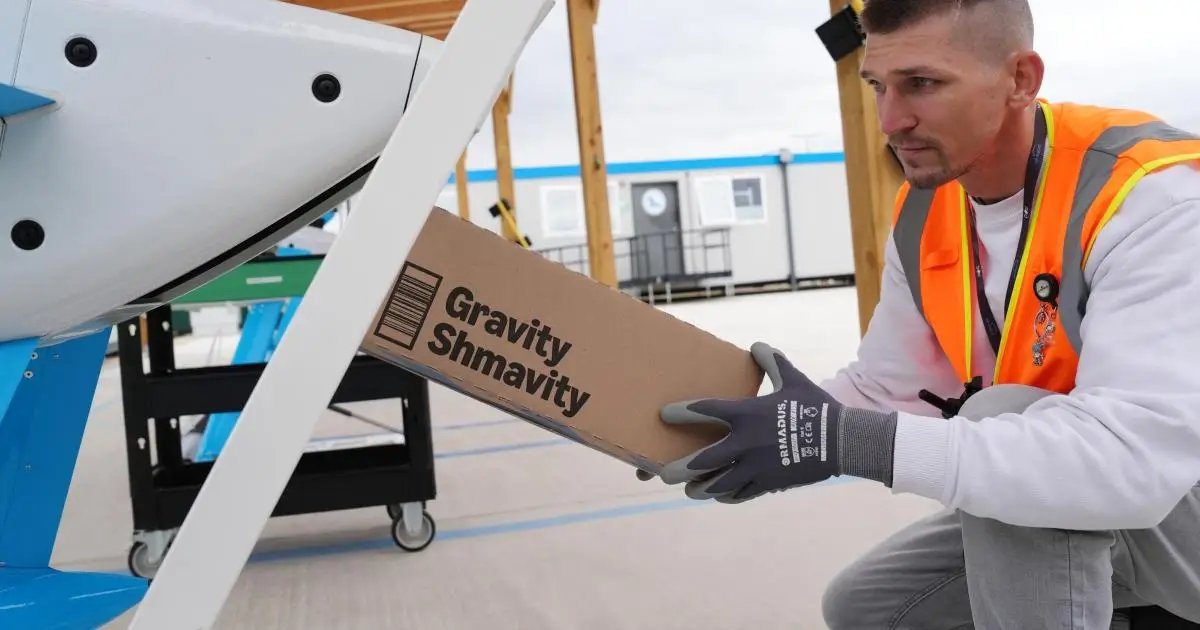
Amazon is on the “precipice” of dramatically expanding its drone delivery service in the UK, with the tech giant expecting approval to cover the whole of Darlington “very soon”.
The service is currently operating on a limited basis in the County Durham town, with eligible Amazon customers able to have certain orders dropped into their gardens, yards or driveways within two hours.
But after more than 500 drone flights and deliveries, Amazon is now seeking permission from the Civil Aviation Authority to expand Prime Air across the whole of Darlington – potentially paving the way for a much wider UK rollout.
David Carbon, vice-president of Prime Air, said the company was “on the precipice” of gaining approval.
He said Amazon was expecting permission “very soon”, with the ultimate ambition of eventually expanding the service across the UK.
The service launched in Darlington in February after Amazon chose the town as its UK test centre – the first time Prime Air had expanded outside the US.
And the drones are already proving capable of delivering orders remarkably quickly.
The best delivery time recorded at the site so far is just 39 minutes.
What can Amazon drones deliver?
For now, Prime Air is only available to customers living within a 7.5-mile radius of Amazon’s Darlington site.
Orders must weigh less than 5lb and fit inside a large shoebox, while customers also need a garden, yard or driveway suitable for a drone delivery.
Amazon says around 68% of items people order are eligible based on the size and weight restrictions.
Customers are shown a satellite map of their property during checkout, with Amazon identifying potential “delivery zones” using its digital mapping and AI systems.
They can then choose one of the suggested drop-off points and are reminded to keep the area clear.
And there is no separate drone delivery charge for UK Amazon Prime members at present, although that could change as the service expands.
Mr Carbon said Amazon was “working through those details” but said it would “not be much of an extra cost”.
Why does Amazon want to deliver by drone?
Amazon says speed is one of the biggest advantages of using a drone rather than sending a van.
During a visit to the Darlington site, Mr Carbon told the Press Association the benefits were “really simple”.
He said: “If you need something in 60 minutes or less – and our average click to delivery time, closing in on a million deliveries in the US, is 34 minutes.
“If you’re going to cobble a bunch of stuff together, it’s hard to get the timing right to get it all in the right place.
“So if you’re doing a single pointed delivery, it’s much easier to go from point to point faster.
“The other advantage is it keeps people off the road. It takes congestion away from the roads, which means you’re not adding to congestion and traffic and the risk that comes with being on the road and all that sort of stuff, and it’s environmentally sustainable.
“So there’s lots of advantages that come with the drone, but most importantly for our customers, we’ve never had a customer say, ‘send my package slower’.
“Speed is always critical.”
What happens if a drone crashes?
The prospect of thousands of delivery drones taking to the skies is likely to raise questions about safety.
An investigation was launched in July after an Amazon drone delivering a package crashed into a garden in Darlington.
Amazon said nobody was injured and its initial assessment was that an object extending above the roof of a moving vehicle “inadvertently came into contact with a Prime Air drone during delivery”.
A spokesperson said “the drone responded as designed and came safely to the ground”.
Mr Carbon acknowledged there had been “some” Prime Air incidents but said “it’s not a percentage that is high at all”.
He said: “In an aerospace programme, you design to the safety level that you want, and our safety level is one commensurate with one that’s laid out through the regulatory framework, and that’s what we designed with.
“That’s why we have no single points of failure in the drone. That’s why we never lose control of the drone, if something was to happen, we’re always in control.
“We’ve designed with those factors in mind, so that we can meet the most rigorous safety requirements for this class of vehicles.”
Will people even notice the drones?
Amazon says the MK30 drones should be difficult for people on the ground to spot as they go about their deliveries.
Mr Carbon said they were “not really” noticeable to the wider public.
“When you’re up around 400 feet or 130 metres, they’re really hard to pick out.
“It’s a big sky, a big back-drop, so they’re really hard to pick out.”
Weather is another limitation.
Prime Air will not operate when conditions are considered unsafe, and a planned demonstration for local stakeholders on Thursday had to be cancelled because of high winds.
Mr Carbon said: “We’ve designed for light rains, light snow, wind gusts, up to the 28mph mark… but like all aerospace… you’d not take off when the weather’s not suitable to fly, and this is no different.”
Could Amazon drones soon be delivering across the UK?
For now, Darlington remains the UK test site.
But Amazon clearly sees the service as something that could eventually become a much more familiar sight across the country.
Mr Carbon said customer feedback so far had been “awesome”.
He added: “People are thankful they can get what they want when they want to, without having to jump in their car.
“Things like baby formula, your headphones – if you’re going to the airport and you can’t find your headphones.
“All these everyday essentials. whether they be health and beauty, or whether they be healthcare, or whether they just be anything, because you’ve got a huge selection to pick from.”
For now, the next big step is approval to expand across Darlington. If that is granted as expected, Amazon will have a much larger test bed for its vision of getting everyday purchases from warehouse to doorstep by air.