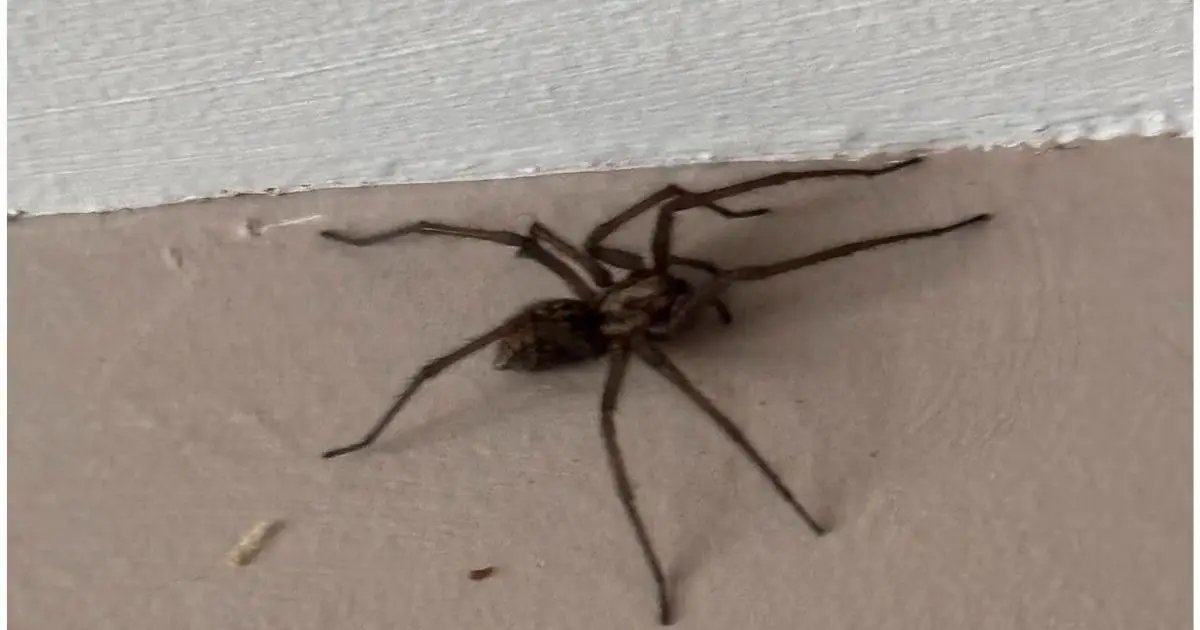
LARGE house spiders are beginning to appear in homes across homes this September as their annual mating season gets underway.
Many people will have spotted large spiders scuttling across carpets, walls and ceilings in recent weeks since the start of Autumn.
For many species, the autumn season is the time of year when they’re mature and also when the females are full of eggs, making some spiders much larger.
READ MORE: Worcestershire Wildlife Trust could soon double Trench Wood
Why are there large spiders in my house?
In September, the sudden appearance of these eight-legged visitors is common as mature male house spiders leave their usual hiding places in search of a mate.
According to Worcestershire Wildlife Trust, autumn is a particularly active period for spiders as many species reach maturity at this time of year.
Once spiders are old enough to hunt for a female, they do not have long left in the world.
Previously, Wendy Carter, of the Worcestershire Wildlife Trust, said: “Indoors, they’ll mostly be house spiders and they’re on the hunt for love.
READ MORE: New wildlife garden opens in Worcester’s Pitchcroft
House spiders may give you a shock when they suddenly appear in the corner of your eye as they race across your carpet but, as with most of our spiders in the UK, they’re basically harmless.
“They may appear to be the arachnid equivalent of Usain Bolt but they can’t keep it up for long – they need to take breathers quite regularly.
“It’s also the season for large spiders outside the house too – whether that be in gardens or the wider landscape.
“Some of the most obvious are the orb weavers – garden cross spiders in the garden, walnut orb weavers on fences and walls and four-spotted orb weavers in grasslands.”
House spiders have chunky but relatively small brown bodies with black markings with long hairy legs.
You can tell males from females, as males have smaller bodies, longer legs and larger palps to transfer sperm to female spiders.