
European Commission President Ursula von der Leyen on Wednesday proposed making Canada the European Union’s first associate member, a striking overture as US President Donald Trump’s threats drive Ottawa closer to Europe.
Speaking in Charlotte, North Carolina, Mr Trump suggested that allowing Canada to become an associate EU member could be a “hostile act” and threatened to respond to the proposed move by imposing more tariffs on the bloc.
Mr Trump conditioned his threat on the “intention” of European leaders, saying that: “If it’s a good intention, that’s fine. If it’s a bad intention, we’ll put very heavy tariffs on Europe.”
He also suggested the US could cut off trade with Europe in certain areas.
Mr Trump called the prospect of Canada joining the EU “laughable” and called America’s neighbour a “terrible trade partner”.
Mr Trump’s tariffs and repeated talk of making Canada the 51st state have soured the relationship between the North American neighbours.
Canada is seeking to reduce its dependence on the United States, the destination for roughly 70% of its exports, and Prime Minister Mark Carney has called for a “unique alliance” with the EU.
In her annual State of the European Union address, Ms von der Leyen said Canada and the EU would build on their existing free trade agreement, known as CETA, with a broader “Alliance for the Future” aimed at creating “a common prosperity and economic security space”.
She cast that closer relationship as rooted not just in trade but in shared democratic values.
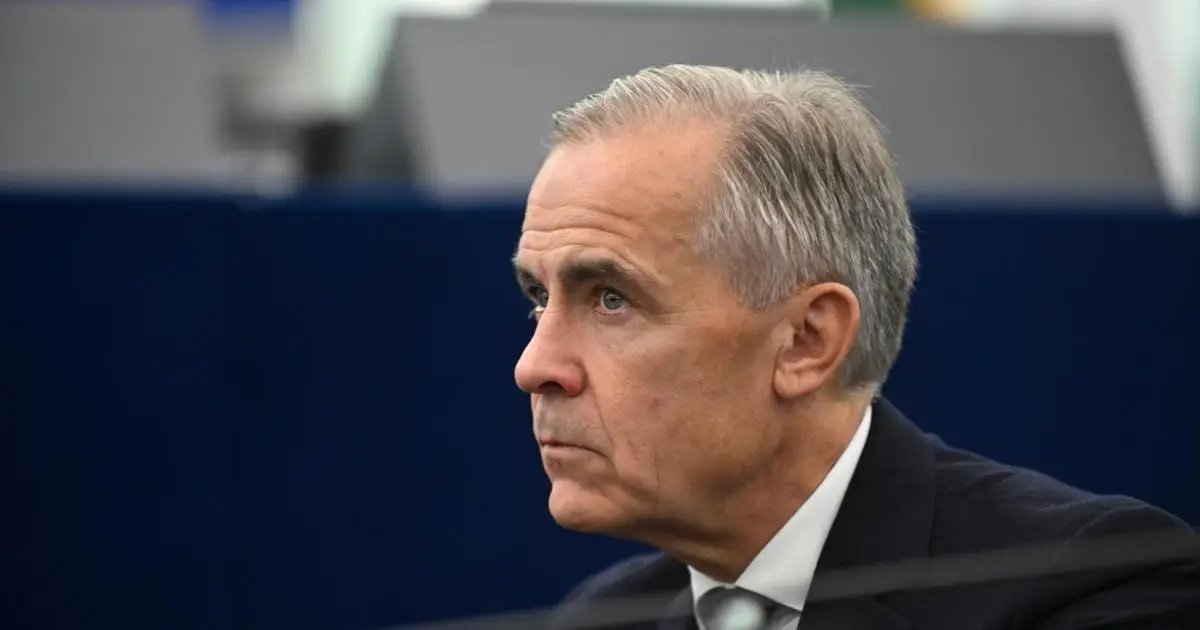
“Above all, dear Mark, Europe and Canada believe in democracy,” Ms von der Leyen said to Mr Carney, who received a standing ovation at the European Parliament in Strasbourg. He is due to address the Parliament on Thursday.
A Canadian official familiar with the discussions told The Associated Press last week that Ottawa was exploring ties with the EU that could stop just short of membership.
The official said Canada would seek an arrangement allowing its citizens to live and work in Europe without visas as part of a broader strategic partnership.
Jonathan Wilkinson, Canada’s ambassador-designate to the EU, said on Wednesday that Ottawa had discussed associate membership with European officials before Ms von der Leyen’s speech and “knew that that was something that was on the table”.
He said Canada had talked to the EU about an “Alliance for the Future”, while European officials had raised associate membership.
Mr Wilkinson said Canada is not seeking full EU membership because it would require surrendering some sovereignty. Instead, Ottawa wants “to get as close as we possibly can” to the bloc in a way that strengthens Canadian sovereignty rather than diminishes it, he said.
Mr Carney’s office welcomed Ms von der Leyen’s proposal, saying Canada was deepening ties with the EU “to strengthen our sovereignty” and supported a move beyond CETA.
Ms Von der Leyen said the expanded partnership would cover advanced manufacturing, technology, defence production, the Arctic, energy, critical minerals, batteries, artificial intelligence, quantum computing, cyber-security and economic security.
“This is a partnership not against anyone else, but for our common strength,” she said. “In short, we want to bring the relationship with Canada to the highest level possible.”
Because Canada joining the EU as an associate member would be a first, there is no rule book on how that would work or what it would mean in practice. It is unclear who would need to approve membership, and how long that could take.
Mr Wilkinson said Ottawa and Brussels are deliberately focusing first on the substance of the relationship rather than what to call it.
“Before you actually get to the point where you decide what you’re going to call something, you should actually know the shape,” he said.
He said the shape is likely to become clearer at the Canada-EU summit in October, when the two sides expect to make an announcement and may settle on how to describe it.
Currently, all steps towards EU membership must be approved unanimously by the 27 member countries.
The idea of associate membership has been floated in the past for Ukraine, or for post-Brexit Britain, but no concrete steps have been taken.
The relationship between Canada and the European Union has reached a point where the two sides need to move beyond rhetoric and start building something more substantive, said Tobias Cremer, a German member of the European Parliament.
“Now is the time to stop sending each other love letters and put meat on the bone,” said Mr Cremer, from the centre-left Social Democrats.
He argued that any new arrangement should be more ambitious than another trade or defence agreement, describing the goal as a more holistic strategic alliance between Canada and the EU.
Existing frameworks such as CETA could provide a foundation, Mr Cremer said, but should be used more fully and expanded. The case for closer ties, he said, is increasingly being driven by geopolitics as much as economics.
