
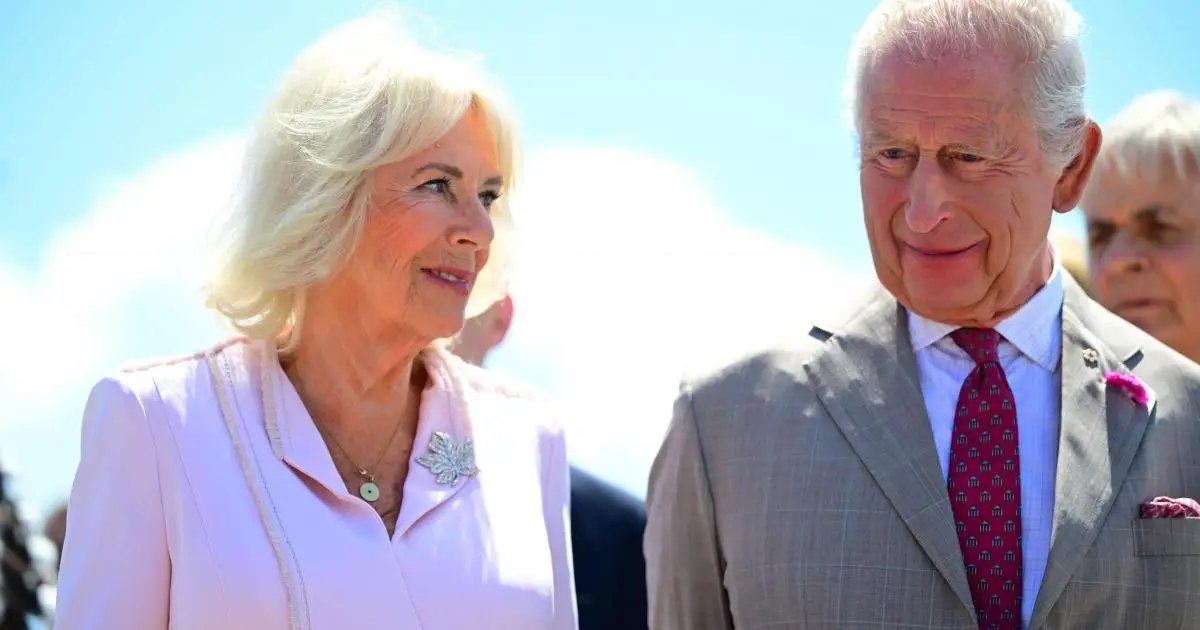
The public has rallied around King Charles following a bid to prosecute him in an international court, which was then thrown out.
This decision was handed down by three judges in Victoria’s Court of Appeal in Australia, who dismissed an attempt by Indigenous activist and elder Robbie Thorpe to bring a private prosecution against the monarch.
King Charles, who has a house locally in the Cotswolds, is Australia’s head of state as well as the King of the United Kingdom.
The ruling leaves Mr Thorpe with one remaining domestic avenue, seeking permission to appeal to Australia’s High Court.
READ MORE: Clarkson’s Farm star Kaleb Cooper’s new puppy rushed to emergency vets
ABC News reported that the High Court accepts only a small proportion of applications for leave to appeal.
Mr Thorpe, a 68-year-old elder of the Krautatungalung people, has been attempting since 2023 to launch legal proceedings against the King in Melbourne.
His case alleged that the monarch, together with Australian government institutions, was perpetrating genocide through systems that disadvantage Indigenous Australians.
Following the latest ruling, Mr Thorpe indicated he intended to pursue the matter internationally.
READ MORE: Paul Hollywood scolds Nigella over controversial Bake Off behaviour
He said: “The International Criminal Court will expose Australia for what it really is — a lying, racist, illegal occupation committing genocide.”
Monday’s decision marked Mr Thorpe’s third legal defeat since beginning his campaign to bring the case before the courts.
According to ABC News and AP, Indigenous Australians make up around four per cent of the country’s population and experience poorer health outcomes, lower life expectancy and higher rates of unemployment and imprisonment than other Australians, according to official statistics.
Legal experts quoted by the news organisations said the British monarch enjoys extensive immunity from criminal and civil liability in the United Kingdom.
READ MORE: Royal butler defends King Charles after allegations made
Constitutional lawyer Anne Twomey, of Sydney University, said this protection is likely to have been inherited by Australia, although she noted she was unaware of the issue having previously been tested in an Australian court.
The reports also noted that while the International Criminal Court does not recognise immunity for heads of state, individuals cannot themselves initiate prosecutions before the court.
Following the news, many were quick to react online, in support of the monarch, as one social media user on X said: “The King of Australia literally can’t be prosecuted in Australia, I’m not sure how this even got to a court at all.”
Another added: “How did they even allow this to be filed, given that the King can’t be sued in his own courts? It’s absurd and outrageous!
READ MORE: Jeremy Clarkson casts serious doubt on future of Clarkson’s Farm
A third remarked: “You can’t prosecute someone who had no involvement in that crime. Some people are so thick.”
International law expert Don Rothwell of the Australian National University said individuals can instead submit evidence to prosecutors for consideration.
He said: “An individual cannot commence a prosecution. If they’ve exhausted all of their options under Australian law, the best that they can do is seek to provide evidence that they believe constitutes the crime of genocide.
“It’s then up to the International Criminal Court to determine whether they would seek to prosecute.”
