
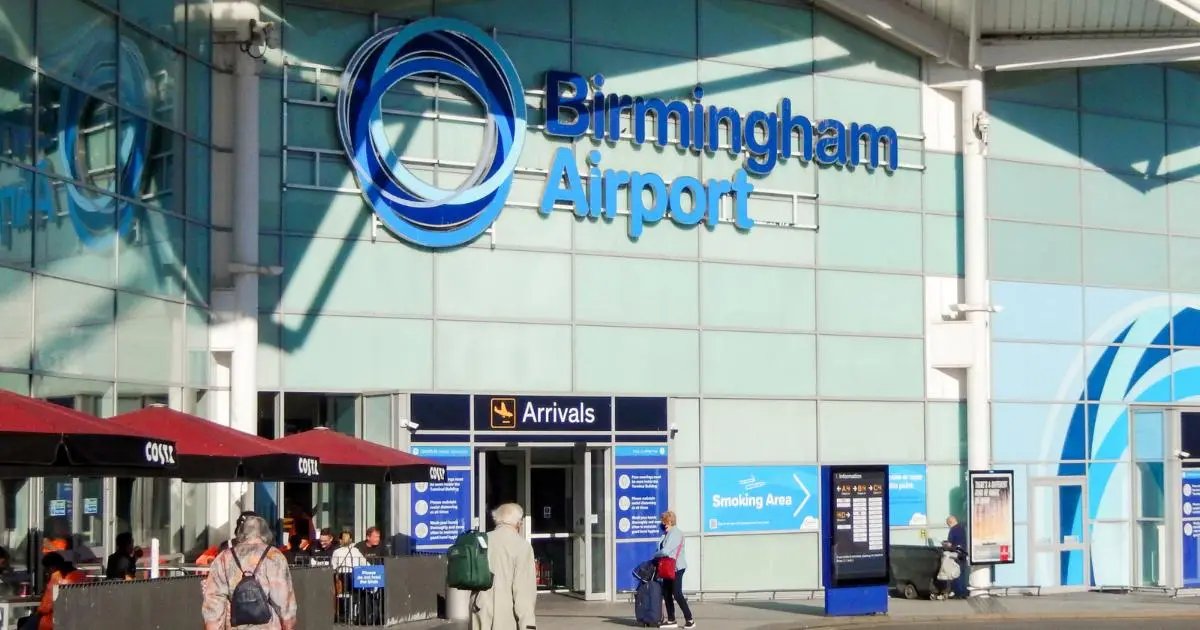
Passengers will soon be able to breeze through border control at Birmingham Airport using only their face thanks to a new passport-free system.
A new “contactless borders” system is being rolled out firstly at Birmingham and East Midlands airports in the coming weeks, with all UK e-gates expected to be upgraded by early next year, revealed The Times.
Here is how it would work when you visit Birmingham Airport:
How does it work?
For now, when you go through a British airport, you can go use e-gates. You have to scan your passport, then a screen analyses your face to make sure they match.
The self-service barrier uses facial recognition and biometric passport scanning to verify your identity and let you pass through border control without speaking to an officer.
However, the new system that will be implemented in the coming weeks no longer needs your passport.
The technology, which uses facial recognition to match travellers to a gallery of passport photos provided by airlines, will allow passengers to clear border control without needing to scan their passport.
From now on, no need for your passport, your face will be enough.
Phil Douglas, director general of Border Force, said: “It will mean we have a more secure border and a much faster transit through the airport.
“It’s quicker, it’s more modern, it’s more secure.”
Who can use the passport-free gates?
The system will initially be available only to British passport holders, though travellers will still need to carry their passport for check-in and boarding.
While British passport holders will be the first to benefit, the government is working on extending the technology to other travellers.
The government plans to include eligible travellers from other countries, such as those holding biometric passports from Europe, the US, Canada, Australia, and Japan.
Is it safe?
The new system eliminates the need for passport scanning altogether, relying solely on facial recognition.
Passengers whose faces are not recognised by the system will be asked to scan their passport as usual.
If that also fails, they will be directed to a staffed desk for manual processing by a Border Force officer.
The Home Office said a three-week trial at Manchester Airport in October last year showed promising results, with passengers moving through the gates quicker and reporting a better overall experience.
What is the purpose of it?
Mr Douglas said the contactless gates could reduce time spent at the border by up to 25 per cent.
He said: “Because we know who’s coming and can load up that gallery of who is arriving, it’s not a one in 60 million check, it’s a one in tens of thousands check.
“I’m committed to border security and I think it’s really important that people who come to the UK have a good experience coming through immigration.
“Waiting in a two-hour queue is not acceptable.”
Currently, the e-gate process typically takes 20 to 25 seconds per passenger, but delays often occur due to issues such as incorrect passport placement or unreadable chips.
The new facial recognition system aims to address these problems and further streamline the process.
Which airport will have this technology?
E-gates are currently in operation at Birmingham, Bristol, Cardiff, East Midlands, Edinburgh, Gatwick, Glasgow, Heathrow, London City, Luton, Manchester, Newcastle, and Stansted airports.
All are expected to be upgraded with the contactless system by early next year.
While the UK is leading the way in Europe with this technology, similar systems are already in use elsewhere.
Dubai allows travellers from up to 50 nationalities to use facial recognition at its airports, and Australia has incorporated similar technology into its border process.
Travellers are reminded that they will still need to carry their passport for check-in and boarding.
