
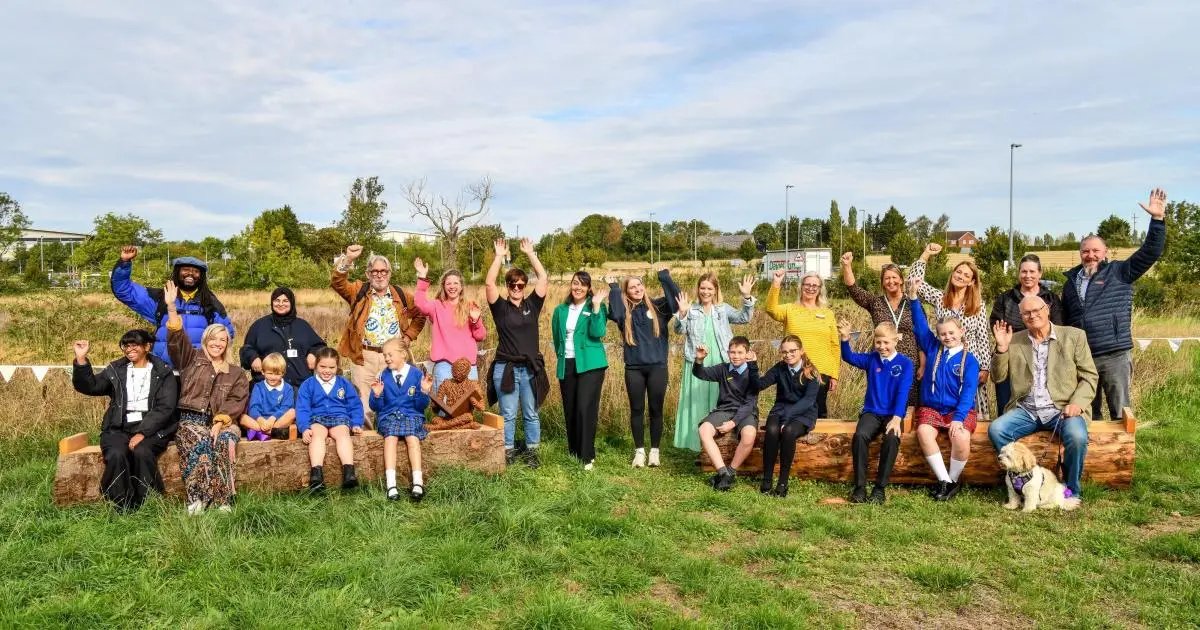
A NEW eco area shaped by the ideas and artwork of schoolchildren has officially opened near Worcestershire Parkway station.
The Worcestershire Parkway Eco Area, developed through a partnership between the Worcestershire Community Rail Partnership (WCRP) and the Bee Friendly Trust, transforms land owned by Worcestershire County Council into a space where the public can explore and learn about nature.
Hayley Cartwright from the Worcestershire Community Rail Partnership said: “Worcestershire Parkway was built to move people, but we wanted to help it become somewhere people could also connect with the place around them.
“What makes this project particularly special is that we didn’t simply design a space for children – we asked children what they wanted to see.
“Their ideas are now permanently part of the station environment.”
Around 100 pupils from Norton Juxta Kempsey CE Primary School, Honeybourne Primary School, Himbleton CE Primary School, and St Barnabas CE First & Middle School took part in workshops to help shape the project.
Their drawings of wildlife have been carved into benches, signage, and footbridges around the site.
The project, led by the Bee Friendly Trust, builds on earlier work identifying the site’s potential.
WCRP managed funding and brought together rail, council, and community partners.
Phase one received £32,000 from the Community Rail Network, CrossCountry, Great Western Railway, and WCRP, with additional support from Network Rail, Worcestershire County Council, Men’s Shed, and the Worcestershire Wildlife Trust.
The eco area now features information boards, willow-woven wildlife along the footbridge, log seating, and a fingerpost to encourage exploration.
Men’s Shed Worcester is building a chalkboard and storage for outdoor learning.
Future plans include extra planting, a bug hotel, interactive artwork, a cob sculpture, and further opportunities for community involvement.
The space is open to schools, community groups, rail partnerships, passengers, and the public.
It aims to show how community rail can improve the areas surrounding stations, making them more welcoming and educational while strengthening connections with nature.
