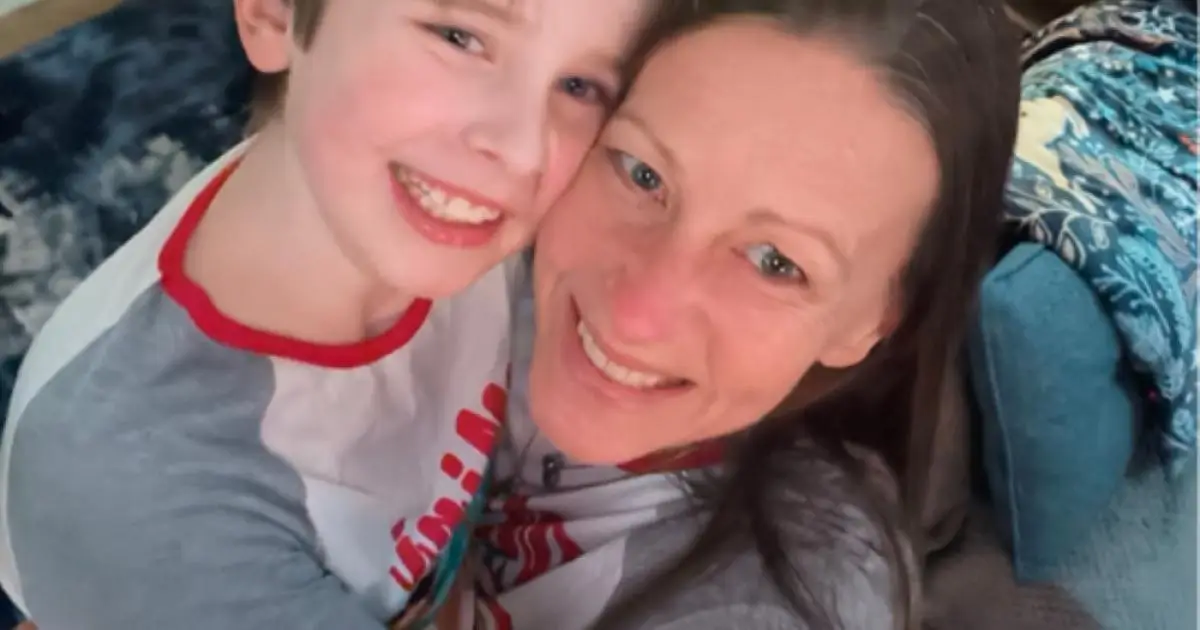
A boy who ended up in hospital after drinking water during a parasitic outbreak in Devon has lost his confidence and is “scared of falling ill again”, his mother has said.
Rafferty Watts was struck down by Cryptosporidium after drinking tap water in his Brixham home in May 2024.
At first, the 10-year-old was not eating and found it difficult to swallow. Days later, he developed symptoms including diarrhoea, abdominal pain and heartburn.
Hospital tests confirmed he had contracted Cryptosporidium, a parasite which causes sickness and diarrhoea.
His mother Jennifer Watts, 52, said: “One of my biggest fears is that life will never be the same again after this experience.
“It was terrifying to watch Rafferty’s symptoms get worse and not go away. As a mum all I wanted was to help my son, but there was nothing I could do. I felt completely at a loss.
“Before he fell ill, Rafferty was happy, confident and outgoing. However, after returning home from hospital and testing positive for Cryptosporidium, he was a lot more withdrawn.
“He associates eating and drinking with his illness, so he has struggled with this ever since, as he’s scared of falling ill again.
“Even now, he refuses to eat outside the house on most occasions, so it is virtually impossible for us to travel away from home.”
She was speaking as South West Water Ltd was handed a record fine of almost £2 million for supplying water unfit for human consumption after a parasitic outbreak in Devon.
The company pleaded guilty to an offence under s70(1) of the Water Industry Act 1991 over the contamination of water by cryptosporidium, a parasite which causes sickness and diarrhoea.
Exeter Magistrates’ Court heard there were 537 probable or confirmed cases of cryptosporidiosis, with at least 10 people admitted to hospital.
Ms Watts said: “It’s worrying that what happened to us happened to so many people.
“We’d much rather not be in this position, but I’m pleased that the water company has been held accountable, especially if it reduces the risk of something similar happening again.”
During the outbreak, there were 143 confirmed cases, with 126 identified as the strain of cryptosporidiosis specific to the Brixham strain.
More than 16,000 homes in the area were issued with boil notices, where water must be boiled then cooled before being consumed, which were not lifted for some properties for 54 days.
Rafferty was given IV fluids and paracetamol at hospital and was later was admitted for three nights.
He had significant weight loss after refusing to eat or drink for a prolonged period during his illness, his mother recalled.
Rafferty appears to have developed complications, including post-gastroenteritis constipation, obsessive-compulsive disorder and avoidant/restrictive food intake disorder.
Ms Watts said: “One of my biggest fears is that life will never be the same again after this experience.
“It was terrifying to watch Rafferty’s symptoms get worse and not go away. As a mum all I wanted was to help my son, but there was nothing I could do. I felt completely at a loss.”
People are still “greatly affected by their illnesses” some two years after the outbreak, according to Jatinder Paul, the expert public health lawyer at Irwin Mitchell representing affected residents.
He said: “Some have gone on to develop conditions such as irritable bowel syndrome, while others have been hospitalised and continue to suffer with the psychological impact.
“Nothing will make up for what they’ve been through, but we welcome today’s sentence which we hope acts as a stark reminder of the need for water companies to ensure they uphold rigorous standards at all times, to ensure public safety.”