
Transport for London (TfL) last month unveiled plans to give buses priority at all 3,500 traffic lights they pass in London by 2030.
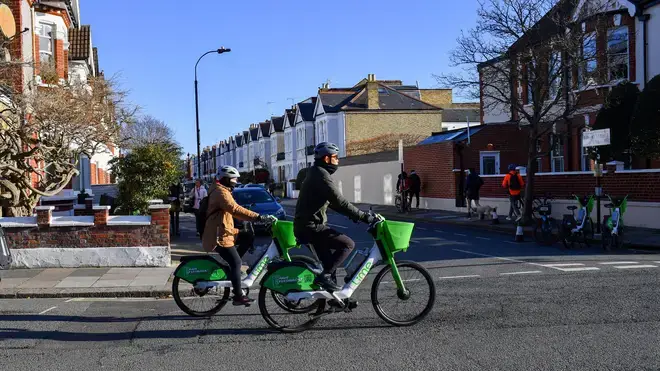
Hal Stevenson, policy director for Lime, welcomed the announcement, but called for the measure to be extended to bikes.
“Cyclists shouldn’t be left on red,” he wrote in an article for news website MyLondon.
Mr Stevenson noted that cycling accounted for up to one in five trips in central London, with cycle traffic at peak times exceeding cars.
“Despite this, signal timings remain set around motor traffic speeds, which can lead to frequent stopping and less smooth journeys for people on bikes,” he added.
Mr Stevenson has said rethinking how traffic lights are timed could be a natural next step in building on the success of TFL's cycling network extension.
He added: “Other leading cycling cities like Copenhagen and Amsterdam show what’s possible.
"‘Green wave’ technology, which rewards cyclists travelling at a safe, consistent speed with a sequence of green lights, has improved safety and rider behaviour while reducing journey times at relatively low cost."
However, Steve McNamara, general secretary of the Licensed Taxi Drivers Association, described the suggestion as “farcical”.
He told the Press Association that London is “incredibly congested”, with traffic “slower than it’s ever been”. He claimed people who hire bikes are “incentivised” to take “dangerous risks” such as ignoring red lights because the companies’ time-based pricing means it is cheaper if journeys are completed quicker.
Mr McNamara said he attends road safety meetings alongside members of the “white, middle-class cycling lobby” whose “whole obsession is removing vehicle traffic from the roads”, adding “Has it not occurred to them that some people either can’t or don’t want to cycle?It doesn’t mean there’s anything wrong with them.”
A recent report by location technology company TomTom found London was the world’s slowest capital city to drive in last year.
It took an average of three minutes and 38 seconds to drive one kilometre (0.6 miles) in the centre of London last year, according to the analysis. This was partly blamed on widespread 20mph speed limits.
Reducing speed limits from 30mph to 20mph has been one of Mayor of London Sir Sadiq Khan’s key transport policies as part of his ambition to reduce road casualties.
A spokesperson for the mayor said journey times on the TfL road network “remain at similar levels to those in 2019” and “studies have shown 20mph limits and zones may improve traffic flow and cut traffic jams”.
A TfL spokesperson added: “We already take cyclists, as well as pedestrians and other traffic, into account when we review the timings of around 1,200 signals each year.
“We’re also working to transform the technology behind London’s traffic signals, moving towards an intelligent adaptive traffic signal system that optimises the amount of green time for everyone.”
