
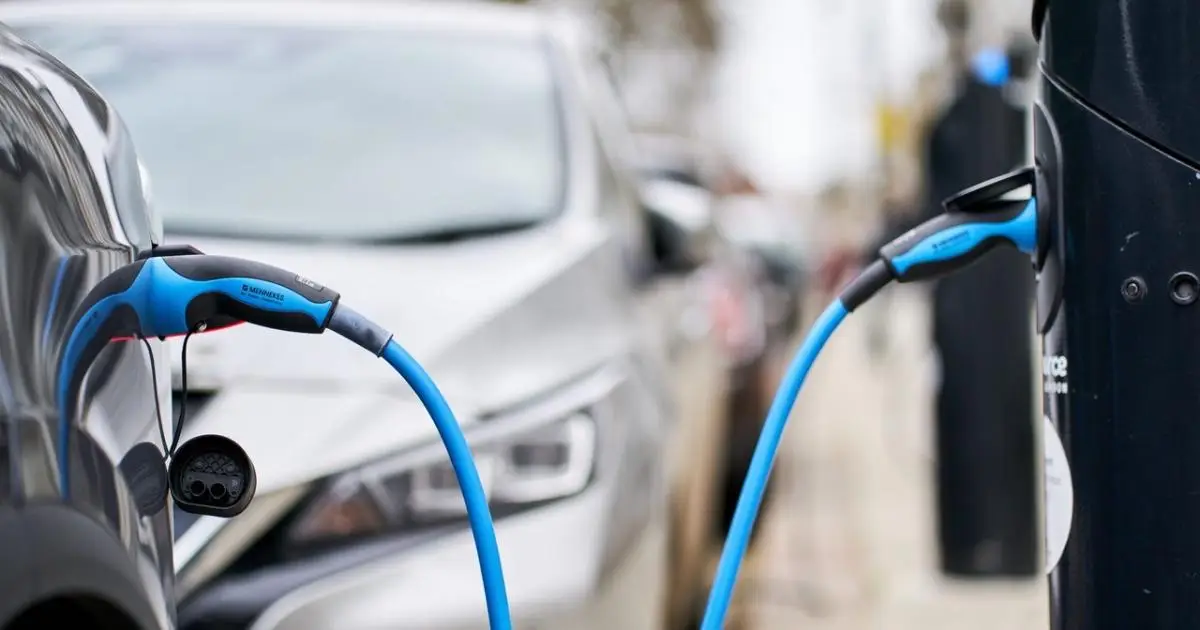
A UK company known for supplying electric vehicle charging stations to the likes of Amazon, Tesco, DHL, and Sainsbury’s has entered administration.
EO Charging, which is based in London, was founded in 2014 and provides electric vehicle charging infrastructure, software, and associated 24/7 repair and incident support.
Its customer base includes major supermarkets and large UK‑based commercial fleet operators, including:
View this post on Instagram
A post shared by EO Charging (@eocharging)
A post shared by EO Charging (@eocharging)
EO Charging enters administration with 69 jobs cut
Now, after 12 years, EO Charging is at risk of closing, having entered administration.
Edward Williams, Ross Connock, and Victoria Hatton from PwC were appointed joint administrators of EO Charging (trading name of Juuce Limited) earlier this month (on April 8).
PwC explained that the company has experienced “challenging trading conditions” in recent years.
The business has been loss‑making, following an overseas expansion into the US, Australia, New Zealand, and Italy.
In the second half of 2025, the group scaled back to the UK and refocused on its cloud‑based charge point management platform.
View this post on Instagram
A post shared by EO Charging (@eocharging)
A post shared by EO Charging (@eocharging)
Despite shareholders providing additional funding and a successful round of fundraising, liquidity challenges resurfaced.
An accelerated M&A process commenced in January 2026, however, it did not result in a transaction.
As a result, EO Charging had no other option but to enter administration.
Following the appointment of administrators, 69 of EO Charging’s 93 employees have been made redundant.
The remaining employees will be retained for a “short time” to assist with the winding down of operations.
The joint administrators will support affected employees in making claims to the Redundancy Payments Service.
Joint administrator and partner at PwC, Edward Williams, said: “It’s regrettable that the Company has been left with no option but to enter administration and that 69 employees have sadly been made redundant.
“The administrators are looking to assist customers in smoothly transitioning to alternative suppliers with the support of the remaining employees, before winding down the company in an orderly manner and seeking to optimise the value of its assets.”
What happens when a company goes into administration?
When a company enters administration, it means that it is unable to pay expenses, debts, or other liabilities, according to SquareUp.com.
Companies House adds: “When a company goes into administration, they have entered a legal process (under the Insolvency Act 1986) with the aim of achieving one of the statutory objectives of an administration. This may be to rescue a viable business that is insolvent due to cashflow problems.
“An appointment of an administrator (a licensed insolvency practitioner) will be made by directors, a creditor or the court to fulfil the administration process.”
A statutory moratorium is put in place once a company enters administration, giving it “breathing space” to allow for financial restructuring plans to be drawn up free from creditor enforcement actions.
A company can continue to trade while in administration, but daily management and control are handed over to the administrators.
Companies House continues: “Within 8 weeks it is the administrators’ role to formulate administration proposals.
“Creditors are then asked to vote by a decision procedure to approve the administrators’ proposals.
“If the administration involves a sale of all or part of the company’s business, the proceeds (after the costs of the procedure) will be distributed to creditors in a statutory order of priority.”
Administration will end automatically after 12 months unless the administrator asks the court or creditors for an extension.
Through administration, a company can be:
Other UK companies that have closed or entered administration/liquidation in 2026 (so far)
It has been a rough start to 2026 for the UK high street, with several other retailers entering administration and others announcing widespread store closures.
Major high street retailers, including River Island, Primark, and Poundland, have already been forced to close stores in 2026, while Revolution and BrewDog shut the doors to 21 and 38 pubs, respectively.
Several other retailers have fallen into administration, including:
Meanwhile, four UK travel companies have closed in 2026:
EcoJet Airlines, billed as “the world’s first Electric Airline”, also entered liquidation after just three years, resulting in the cancellation of all planned flights.
What has a nose, wings and runs off of hydrogen? Ecojet 😎 pic.twitter.com/y8QGiBdFe2
— ecotricity (@ecotricity) July 17, 2023
UK delivery company Yodel is set to be phased out over the coming months after being acquired by InPost.
It’s also been reported that Morrisons is looking to sell some of its in-store pharmacies as it continues to cut costs.
It’s not been all bad news for the UK high street, with several major brands announcing new store openings for 2026, including Aldi, M&S, and Superdrug.
Have you been affected by any business/store closures in 2026? Let us know in the comments below.
