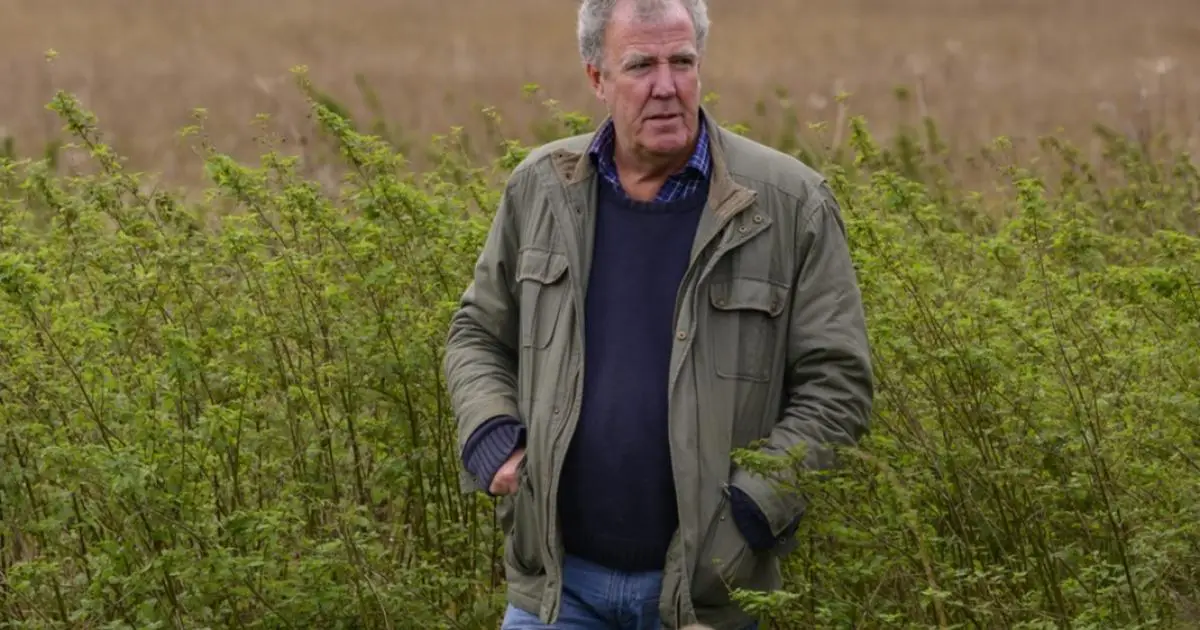
A farmer has credited Jeremy Clarkson’s TV series with helping him launch his social media channels and has since gained thousands of online followers.
James Peck, 50, farms about 12,500 acres across Cambridgeshire, Bedfordshire, Hertfordshire, and Lincolnshire.
He turned to social media to counter negativity faced by his daughters, aged 13 and 12, who were interested in joining the farming industry.
Initially sceptical about the interest in his farming life, a videographer encouraged him to post videos online.
Peck now shares glimpses of life on his farm twice a week, amassing between 7.5 to eight million views monthly.
His videos span various aspects of his farm, from haulage and grain storage to lettings, house building, and media, highlighting the diversity of his arable farming business.
Peck also credits Jeremy Clarkson’s fly-on-the-wall TV series that documents his Diddly Squat farm as a major influence in launching his own PX Farms social media channels across Facebook, Instagram, TikTok, YouTube and X.
“Originally, when I went to school events and things I was the only farmer there, and it was a bit of a conversation killer,” Peck told the BBC.
“But Clarkson’s Farm came out… and suddenly I had people coming up to me wanting to talk to me about farming.”
The success of his social media venture has not only broadened the appeal of farming but also helped educate the public about the realities of the industry.
James Peck said Clarkson’s Farm gave him something to talk about with other parents (Image: Ed Nix)
Peck often explains the various ways his farm operates, offering insights into the inner workings of modern farming.
On Wednesday, he explained how he had to go out with the combine harvesters at 06:00 BST to pick beans before the sun affected the harvesting.
If the vehicles went out later in the day, the beans would split too easily from the dried out pods and end up on the ground instead of inside the machine.
Peck said the extreme heat could mean that half of the potential crop yield would be spoiled if he did not change the harvest time.
Despite his initial reluctance to share his farming life online, Peck now believes it was the right decision.
He said each video normally received about 1,400 social media comments and he’d received a total of only 12 “really negative” ones over the two years.
“I was very nervous about doing this because of the negativity aspect, but I really want the industry to do well and want new people to come in,” he said.
“I want to show it is a vibrant, exciting thing.”
Peck’s online presence has not only helped dispel negativity about farming but also inspired his daughters and others, showing them the vibrant and evolving nature of the industry.