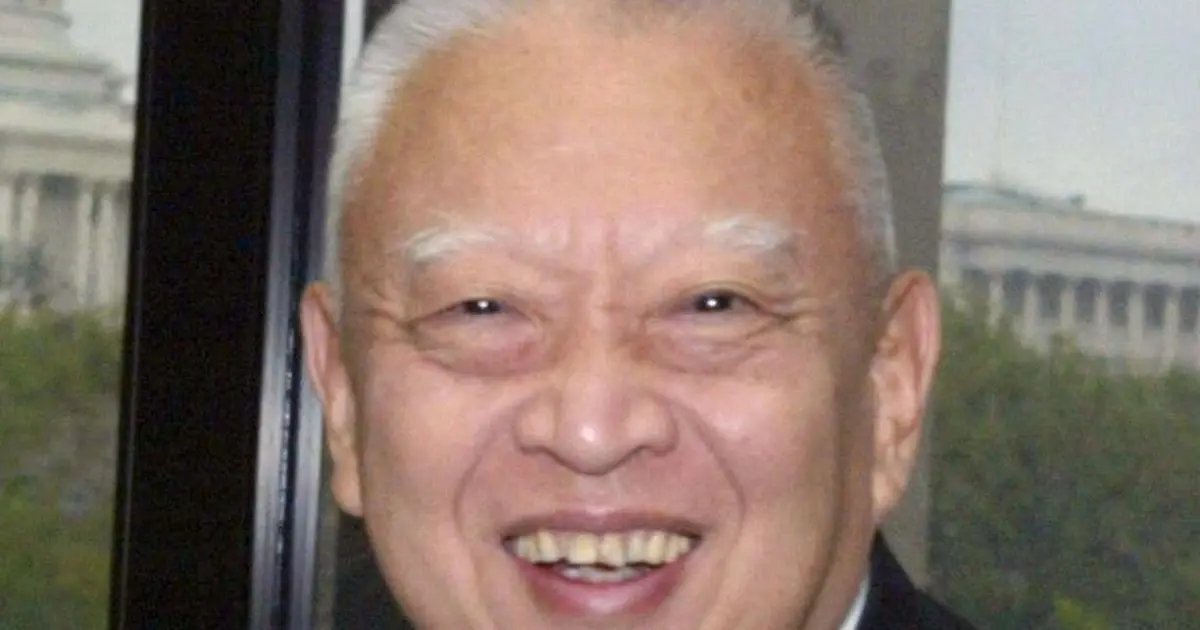
Tung Chee-hwa, a shipping heir who became Hong Kong’s first leader after the former British colony returned to Chinese rule, has died aged 89.
His office said in a statement that Mr Tung passed away peacefully in the presence of his family members on Tuesday.
The tycoon had little political experience before a panel of pro-Beijing elites picked him in 1997 to be the first leader of the southern Chinese territory after the end of British colonial rule.
He served as Hong Kong’s chief executive for about eight years.
Many believe Beijing perceived Mr Tung, who struggled to cope with an Asian financial crisis and growing protests for democracy in the early years under Chinese rule, as a loyalist who would obey the Communist leadership’s edicts.
He was also seen as beholden to Beijing because China’s state-run banks helped rescue his family’s ailing shipping company — Orient Overseas Container Line — during a global slump in the 1980s.
The early years after the handover were sensitive. The “one country, two systems” formula, in which Hong Kong was supposed to maintain civil liberties and other remnants of its British past while Beijing had the final say on issues such as political change, was still untested.
Mr Tung was praised for his work ethic, even nicknamed “7-11” because of his reputation for long workdays, but clumsy political skills and perceived indecisiveness as major crises mounted eroded his popularity and led to a less flattering nickname, “Old Dumb Tung”.
Shortly after Tung took office in 1997, Hong Kong was hit by bird flu — the first known cases of the virus in humans. The wealthy city’s economy was also battered by a financial crisis that swept across Asia.
Mr Tung’s response to the two crises was widely criticised and his deep distrust of the media hindered his ability to improve his image. He was also prone to policy gaffes that made him the butt of jokes.
Despite his rocky first term, Mr Tung was re-elected unopposed by the pro-Beijing electoral committee in 2002.
Mr Tung abruptly resigned in 2005 with two years left in his second term, citing fatigue and failing health. But most believed China’s Communist leadership forced him out of office after losing confidence in his ability to lead the former British colony.