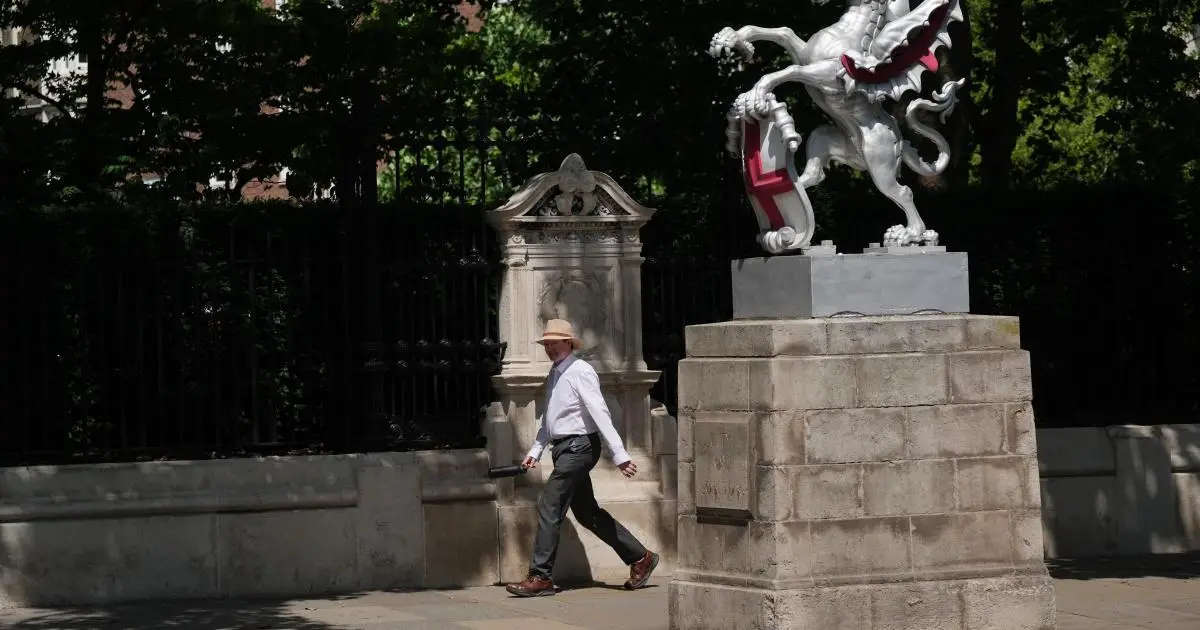
A new record high temperature has been set for June for the second day in a row as the UK swelters in a punishing heatwave.
The Met Office said temperatures had reached 36.4C at Yeovilton, Somerset, on Thursday afternoon, provisionally making it the UK’s hottest June day on record.
This was then surpassed when provisional temperatures reached 36.7C in Merryfield, Somerset.
The new high surpasses both the previous record set on Wednesday, when temperatures reached 36.1C in Gosport, Hampshire, and the long-standing record for June heat which dates back to the infamous summer of 1976.
London Ambulance Service said it had recorded the highest ever number of life-threatening emergencies in its history “driven by the extreme heat” on Wednesday, while doctors have warned of “awful conditions” in NHS facilities in the heatwave.
Schools and nurseries have closed, a hosepipe ban has been brought in for Kent amid surging demand, transport services have been disrupted and one rail operator has urged people not to travel for beach trips because of the extreme heat.
Anglian Water said it has no plans to introduce a hosepipe ban this year – but is urging customers to “use less water wherever they can”.
A swathe of England and Wales remains under a rare red warning for extreme heat, for a second day in a row in the face of hot and humid conditions.
The current heatwave is driven by a “heat-dome” – an area of high pressure that stalls over a region and traps heat – settling over western Europe and bringing extreme conditions across the continent.
Human-driven climate change, mostly caused by burning fossil fuels, is making such extreme heatwaves more frequent and intense.
The Met Office said the new record for the hottest June day could be exceeded again in the coming hours.
Greg Wolverson, deputy chief meteorologist said: “We’ve seen a new provisional June maximum temperature record for a second consecutive day as the heatwave continues.
“This marks unprecedented heat for the month of June and provides further evidence of how high temperature extremes are becoming increasingly common in the UK as a result of human-induced climate change.
“There’s a chance of this record being challenged again as the warmth moves more markedly east on Friday, before a gradual easing in temperatures through the weekend.”
Temperatures have reached 36.4°C at Yeovilton, provisionally making it the hottest June day on record, surpassing both the previous record set yesterday and the longstanding record from 1976 🌡️ pic.twitter.com/BS4omOTeyK
— Met Office (@metoffice) June 25, 2026
Earlier the Met Office extended its red warning until 9pm on Friday for London and parts of east and South East England, stretching across Oxfordshire and Bedfordshire, Hampshire and Kent – the first time it has issued red heat warnings over three consecutive days.
Amber heat warnings are in place for a wider area on Friday, and are running into Saturday for parts of east and South East England.
Meanwhile, a yellow warning is in place for thunderstorms for South West England on Thursday night, and for northern Scotland on Thursday afternoon and evening, while swathes of Scotland, England, Wales and Northern Ireland face yellow warnings for thunderstorms on Friday.
Red heat health alerts have also been issued by the UK Health Security Agency for the East of England, East Midlands, London, the South East, the South West and the West Midlands, and amber heat health alerts for the North East, North West, and Yorkshire and the Humber.
London Ambulance Service responded to 642 category one calls on Wednesday – the highest number of life-threatening emergencies in its history – in what was the emergency service’s fifth busiest day ever.
Category one calls include the most serious, life-threatening injuries and illnesses such as cardiac arrests and patients who are not breathing.
Chief executive Jason Killens said: “We have seen the highest number of life-threatening emergencies in our history, driven by the extreme heat across London.
“Our crews are working very hard in challenging conditions to care for patients and I would like to take this opportunity to thank all our people for their incredible hard work.
“Please help them to help you by taking care of yourself and others – stay out of the sun and keep hydrated.”
In Wales, a 50-year-old man from Cilfrew, Neath Port Talbot, died after entering the water at Aberavon beach on Wednesday, police said.
Several hospitals have declared critical incidents amid the heatwave.
Queen Alexandra Hospital in Portsmouth and Norfolk and Norwich University Hospitals NHS Foundation Trust both declared critical incidents on Wednesday.
University Hospital Southampton declared a critical incident on Thursday afternoon due to the extreme heat which is “placing significant pressure on our service”, it said.
The Met Office said in a post on social media that Wales has seen its hottest June day on record, with 35.9C recorded in Cardiff.
Meanwhile, Northern Ireland has seen the previous record high for June matched after a temperature of 30.8C was reached in Castlederg.
Jersey has recorded its hottest day since records began in 1894 when a temperature of 39.3C was recorded at the Maison St Louis Observatory.
The latest heatwave has prompted renewed calls for the UK to be better prepared for the rising risk of extreme heat that a changing climate is bringing, including cooling for hospitals, schools and care homes, heat regulations for workplaces, and to prepare infrastructure against rising temperatures.
The Royal College of Physicians said doctors have described severe, unsustainable pressure on the workforce, with very few settings having air conditioning, staff “really struggling” and resident doctors battling the heat while sleep deprived.
One physician has warned “conditions are awful” because of overcrowding, another said two machines used to treat cancer had stopped amid the heatwave, and there had been reports of patients on geriatric wards – one of the group’s most vulnerable to heat – facing temperatures of up to 35C.
And as many schools closed or brought in early pick up times in the face of sweltering conditions, Sir Keir Starmer has said it is up to schools to decide for themselves the best course of action.
Asked if it was right that children’s education suffers because of the extreme weather, the Prime Minister said: “It is very hot, and obviously schools will have to take the appropriate measures, and each school will gauge for themselves the measures that are appropriate.
“But it is important that we as a Government co-ordinate this across the country, and actually with all of the countries within the United Kingdom, which is what we’re doing,” he said, adding Cobra meetings were taking place “at the official level”.
The National Education Union has written to Education Secretary Bridget Phillipson, urging her to set out a timetable for equipping schools with air conditioning.
During a visit to Beanfield Primary School in Corby, Northamptonshire, Ms Phillipson said the school closures showed there was “more to do” to ensure buildings are equipped to deal with extreme heat.
London Mayor Sir Sadiq Khan has said air conditioning should be rolled out to schools, offices and hospitals in the capital as it adapts to more intense and frequent heatwaves, as he launched the city’s first ever heat plan to keep Londoners safe.
Councils have opened “cool hubs” across the country including in Lambeth, Barking and Dagenham and Woking.
And dozens of people have flocked to churches across the country to seek shade including at Christ Church, Summerfield in Birmingham, Chichester Cathedral and a number of churches in the Diocese of Ely.