
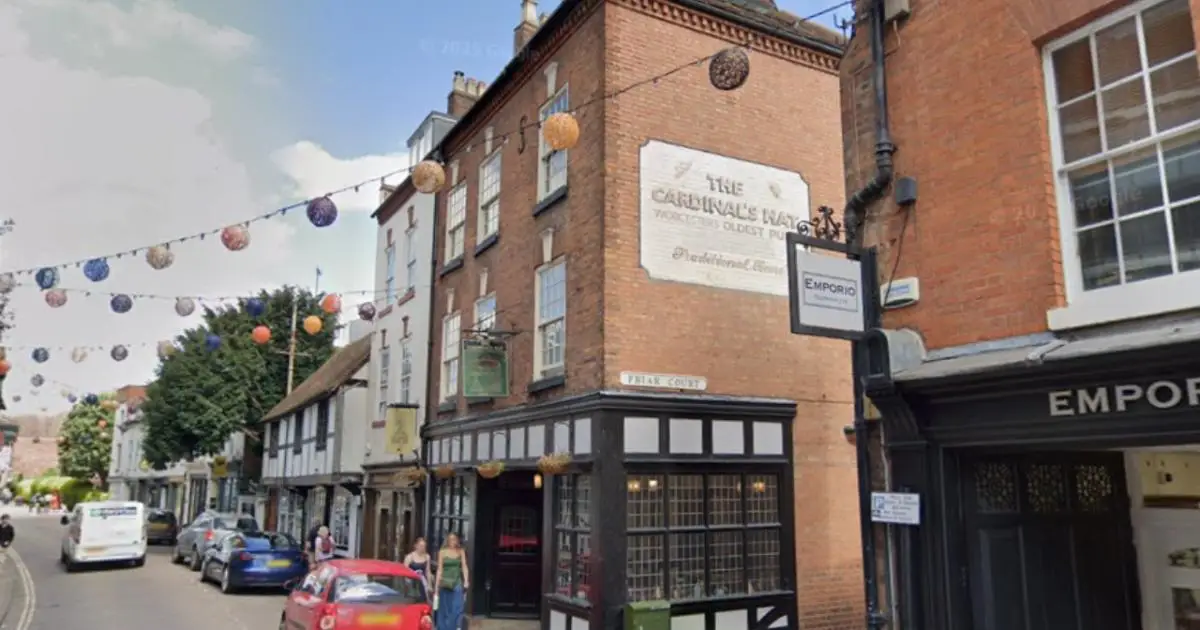
WORCESTER’S ‘oldest pub’, believed to date back to the late 15th century, is set to have solar panels installed.
The Cardinal’s Hat in Friar Street is set to install rooftop panels after Worcester City Council approved its plans.
The Cardinal’s Hat is a Grade II-listed public house, believed to date back to the later 15th century with significant 18th-century rebuilding.
The plans, lodged by Audrey Parker with support from Brodie Planning Associates, propose a roof-mounted photovoltaic array consisting of up to 25 all-black, non-reflective panels, generating an estimated 11.38kW of electricity.
READ MORE: National Trust property in Worcester to close as city bakes in latest heatwave
According to the applicant’s planning statement, the system would produce around 10,351kWh annually and deliver a carbon saving of about three tonnes of CO₂ each year.
The application describes the works as a means to improve the environmental performance of the historic building while maintaining its long-term viability as a public house.
Charley Simpson, planning consultant at Brodie Planning Associates, said: “The proposals represent a low-impact form of development which would deliver clear environmental and public benefits through the generation of renewable energy, reduction in carbon emissions, and support for the continued viable use of this designated heritage asset – ‘Worcester’s oldest pub’.”
READ MORE: Hundreds lose jobs as major factory becomes a ‘ghost town’ days before closure
The application acknowledges the significance of the building’s setting within the Historic City Conservation Area and the potential impact on the historic streetscape.
A heritage assessment concluded that, although the solar panels would be visible from certain public viewpoints, the visual impact would be limited due to the height and context of the roof.
The design and layout have been chosen to avoid obscuring or damaging any architectural or historic features, and the works are described as reversible.
Planning officers recommended approval, stating that the scheme would support the continued use of the heritage asset while contributing to sustainability objectives.
