
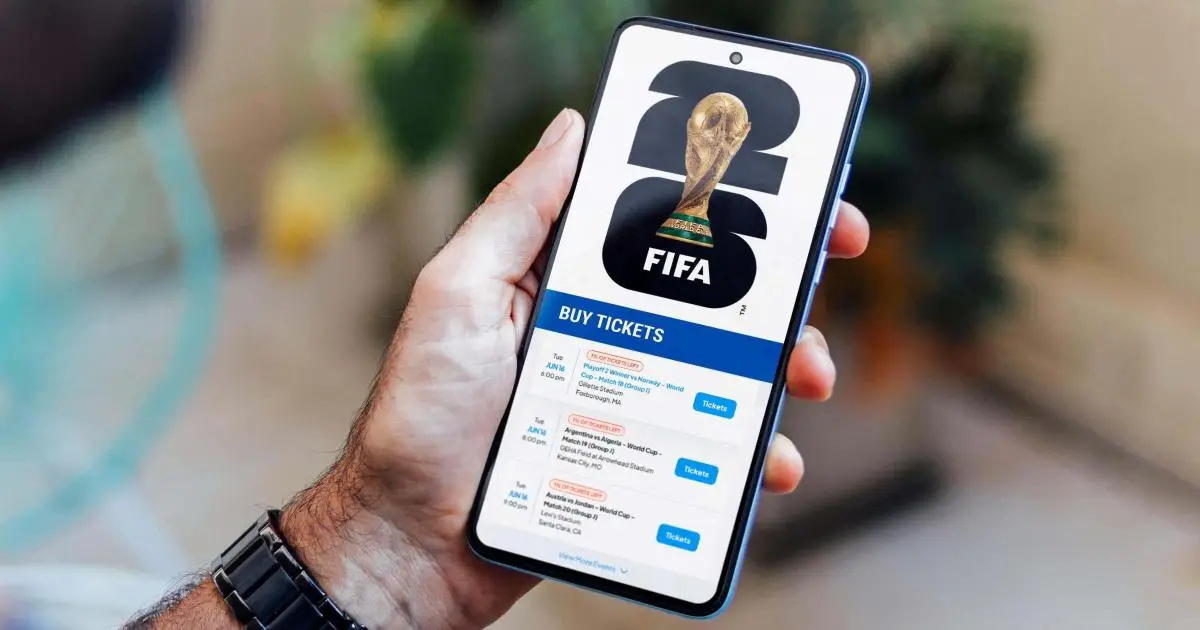
Football fans are being urged to watch out for fraud ahead of the World Cup, as victims of football ticket scams lose £215 on average, according to a bank’s data.
Lloyds said football ticket scams increased by more than a third (36%) during the current Premier League football season.
Its analysis was based on thousands of scam cases between October 2025 and March 2026, comparing this with the same period a year earlier.
The research also indicated that ticket scam fraudsters focus heavily on popular teams such as Arsenal, Liverpool, Chelsea and Manchester United.
Scammers also repeatedly target supporters looking for tickets to some of the most in‑demand UK football matches, such as the FA Cup Final and Champions League Final.
On average victims lost £215 during the current Premier League football season, but some fans paid hundreds or even thousands of pounds for “season tickets” or VIP seats that did not exist.
Lloyds said it is anticipated that fraudsters will attempt to exploit international demand for the World Cup.
It said many football ticket scams start on social media. Criminals advertise a spare ticket and victims are pressured to make a bank transfer. Once the money is sent, the scammer blocks the buyer and disappears.
Fraudsters may create fake waiting lists, counterfeit QR codes or bogus “pre‑release” offers as part of their tactics to part people from their money.
Hopeful football fans are expected to pay much more for World Cup tickets, meaning the potential loss for victims could be devastating – particularly when travel costs are also factored in.
The Government and Lloyds are teaming up to highlight the issue to football supporters, as part of the Stop! Think Fraud campaign.
Led by the Home Office and supported by partners across law enforcement, banking, tech, retail and the charity sector, the campaign helps to educate people and businesses about protecting themselves against fraud.
Liz Ziegler, fraud prevention director, Lloyds, said: “Fraudsters thrive on urgency and target fans looking for hard‑to‑get tickets for big name fixtures.”
She added: “It’s incredibly convincing, and we don’t want fans to lose their money trying to support their team. We’re urging supporters to stay alert and stick to official ticketing channels.”
Lord Hanson, minister for fraud, said: “As excitement builds for the World Cup, fraudsters are preparing to exploit loyal fans searching for tickets.
“I urge all football supporters hunting for tickets to Stop! Think Fraud and show fraudsters the red card.”
He added: “Missing out on a big match is disappointing, but becoming a victim to a scam makes it even harder to bear.”
Earlier this year the Government launched a new fraud strategy to tackle the UK’s most commonly experienced crime.
Here are some tips from Ms Ziegler to avoid football ticket scams:
1. Take your time. If you are offered tickets for a match that is in high demand, do not let the fear of missing out make you rush your decision. Stop, think, and check if the offer is genuine.
2. Be careful with social media adverts. Do some research and consult family or friends before proceeding.
3. Fraudsters ask for bank transfers as they are fast and hard to trace. Treat requests for bank transfers as a major warning sign, particularly if the account details do not match the seller’s name.
4. Be wary of “too good to be true” offers promising tickets that no-one else can supply. If an offer seems unrealistic, it probably is.
5. Use official club channels or authorised sellers. For major events, use the tournament’s official ticketing platforms or club-approved sellers to ensure your purchase is safe.
6. Do not forget that artificial intelligence (AI) can help criminals to create professional content. Just because it has a good layout and graphics, this does not mean it is legitimate.
7. Be cautious of classic pressure phrases such as “lots of interest” or “I need to sell right now”. Scammers often use urgency to push people into making hasty decisions.
8. Report fraud. Anyone who believes they may have been a victim of fraud is encouraged to report it to the police.
