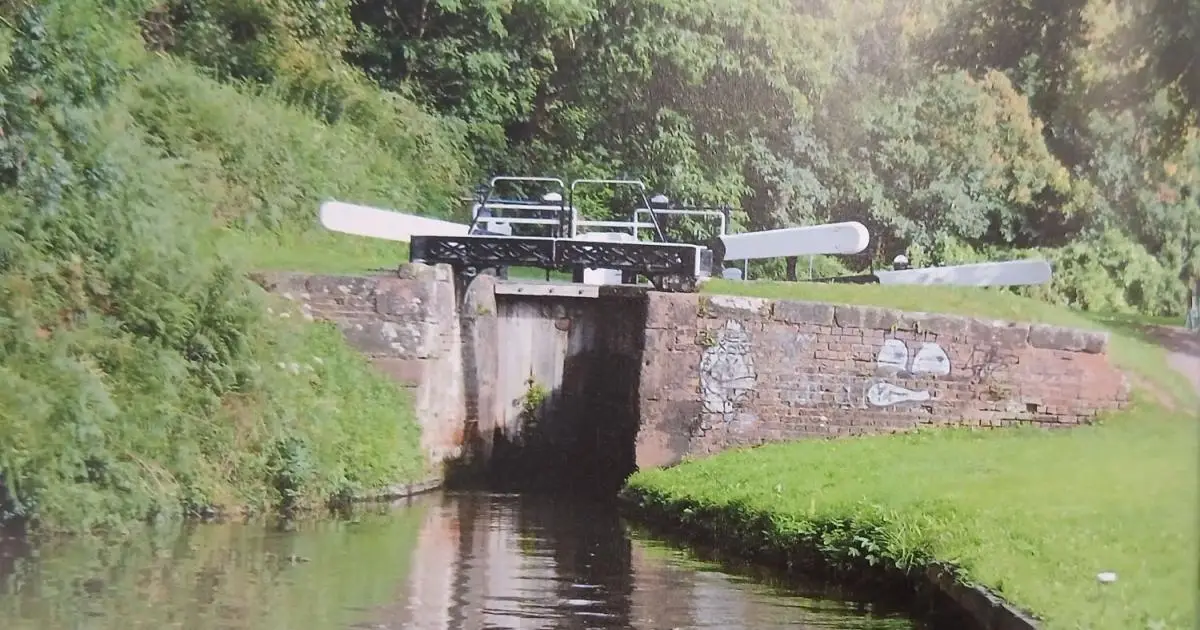
WRITING a piece about a new book on the Staffordshire and Worcestershire canal, I was rather spoilt for choice how to start it.
It could either be, a) what was one of the biggest problems facing canal builders in the late 1700s? Or b) what was the trade, essential then but never heard of now?
The answer to the first was moles and to the second was barrow mender.
You sometimes hear today of rabbits causing problems for railway embankments but never moles. Which would imply there were a lot more of the furry little fellows around then.
While in an era when earth was dug and shifted by hand, wheelbarrows were as essential as shovels so couldn’t be out of action for long. No popping down to Wickes if one broke.
The publication Staffordshire and Worcestershire Canal (Amberley £15.99) is the work of Julian Souter, a former headmaster and English teacher, who lives beside the waterway with an end of garden mooring so he knows the flow, as you may say.
Although the book does contain, as might be expected, some technical detail, it’s a good read for anyone interested in the countryside and not even particularly interested in canals.
The waterway began life as the Wolverhampton Canal because that’s where the pressure came from for a route out for its coal and iron.
In the mid-1700s England’s roads were in dire straits – “perfectly frightful for travellers”, Daniel Defoe called them – being deeply rutted and boggy.
This was caused by heavy goods carried on wagons and packhorses and so ideas were sought to solve the problem. Cue the arrival of the canals.
“However,” as Souter points out, “cutting a canal entails rather more than digging a big trench and then filling it with water. Many issues need to be addressed, such as preventing flooding, finding enough water to feed the canal and building aqueducts, bridges, drains, culverts and locks.
“Water is also needed for puddling, the process by which the canal is lined with thick clay to keep it watertight.
“Trees get in the way and have to be felled, while rock and quicksand are frequent hazards.”
As ever with construction projects, the devil was in the detail.
“Moles also caused great damage to the works, “ Souter adds, “and were a source of aggravation between James Brindley ( the engineer and surveyor, who designed the canal) and John Baker (the clerk of works in charge of construction), the latter reluctant to pay for a molecatcher at 2d per mole.”
With all the digging done by hand by a small army of navvies, wheelbarrows were in constant use to carry materials and remove spoil.
Therefore a whole clutch of barrow menders had to be employed – no barrows, no work – and they also turned their expertise to making planks, piles and centres for bridges or aqueduct arches.
The project was started in 1766 and completed within five years in 1771. Forty-six miles long with 43 locks, it links the Trent and Mersey Canal at Great Haywood in Staffordshire with the River Severn at Stourport in Worcestershire.
In its heyday huge commercial barges carried coal, iron, limestone, wood and much more. Today it is a water-born holiday highway, a hark back to a much more leisurely form of travel. And I bet you never see a mole.