SIR Edward Elgar was described as a sensitive yet touchy and melancholic figure “with a wound that never healed”.
As we have just enjoyed the Elgar Festival in Worcester and Malvern, ever the nurse, I wondered what that wound may have been.
The fourth of seven children, Elgar was born on June 2, 1857, at Lower Broadheath.
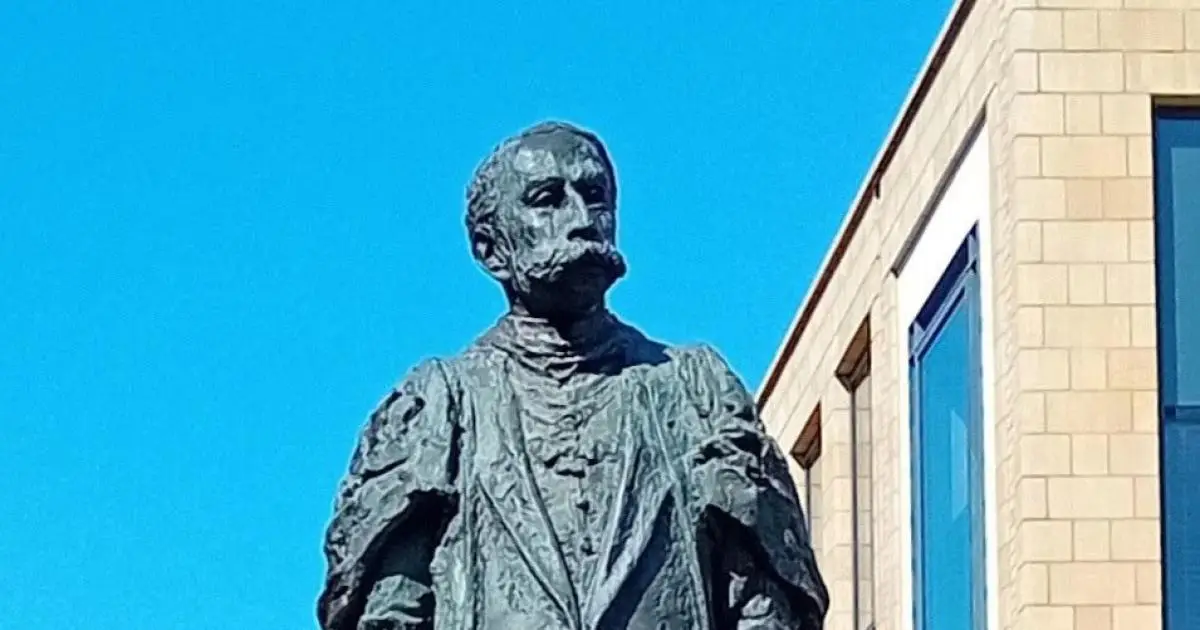
His father William, a violinist and piano tuner, ran a music shop with his brother Frank, an oboist, at 10 High Street, which was demolished in the 1960s, very near to the iconic statue of Elgar that stands there today.
Sir Edward Elgar’s statue standing proudly near to the place of his father’s former music shop (Image: Linda Ford)
More: New private GP surgery opens in city centre offering same-day appointments
At the age of two the family moved into the flat above the shop and it was here Elgar largely self-taught his music surrounded by instruments, pianos and sheet music as his talent and genius developed.
However, he was beset by beating the socio-economic tensions of the time of being known as the piano maker’s son of no musical academia.
His life would change when in 1889 aged 31 he married 40-year-old Caroline Alice Roberts, one of his musical pupils, against the wishes of her family who viewed Elgar as a lower-class musician.
However, with Alice’s determination and constant faith in Elgar’s emerging musical genius she played a vital role in his career.
Success was not easy for him, always feeling out of place among the formally-educated musicians.
After Lady Elgar’s death aged 71 in 1920, with her died much of the younger Elgar’s inspiration and will to compose.
Her driving force, encouragement and proclaiming his talents at every opportunity left a huge void in his life.
Throughout the 1920s he continued to be saddened by bereavement and the social and musical changes bought about after WWI, living in virtual retirement in his beloved countryside.
Elgar had succumbed to many illnesses in his lifetime, suffering from neuralgia, colds, tonsillitis leading to a tonsillectomy for an abscess, foot and eye problems.
Later in life he developed significant hearing loss which meant he could no longer fully experience his work.
In declining health in 1933 he was admitted to South Bank Nursing Home, now the site of Spire South Bank Hospital in Bath Road, and then part of Worcester Infirmary, suffering from back pain.
However, exploratory surgery revealed an inoperable bowel cancer.
Into his life came Kathleen Harrison.
She had trained at Worcester Royal Infirmary and was a sister at the nursing home.
Kathleen was invited by the matron and Elgar’s daughter and only child Carice to become his special nurse.
After caring for him for three months she continued at his home Marlbank in Rainbow Hill in January 1934.
Here Kathleen managed his care and pain relief, learning about his life and music and got on well with Carice.
Finally, she never left his side during the night of February 23, 1934, when he died aged 76.
Kathleen felt privileged to be invited to his requested private funeral of just 20 friends and relatives at St Wulstan’s Roman Catholic Church in Little Malvern to be finally reunited with his devoted wife.
Sadly, Elgar’s deep-seated desire for broader recognition of his music legacy did not come to pass in his lifetime.
Thankfully, history has ensured his music is now universally recognised as a testament of his genius.
His status as a musical icon resonates through time with an impact profound and enduring.
Elgar had a strong belief about the power of music to bring people together to heal and to inspire.
Sir Edward Elgar’s birthplace at The Firs in Lower Broadheath (Image: Roger Mason)
This idea we now know can help with emotional recovery and would have resonated with him.
Finally, as I now view his statue I would like to think his wound had been partially healed by his devoted wife, his beloved daughter and at the end of his life by Kathleen.
She shared that unique, powerful nurse-patient relationship and one I have been fortunate and privileged to be part of myself over many years.
Our community columnist Linda Ford is a retired nurse.