
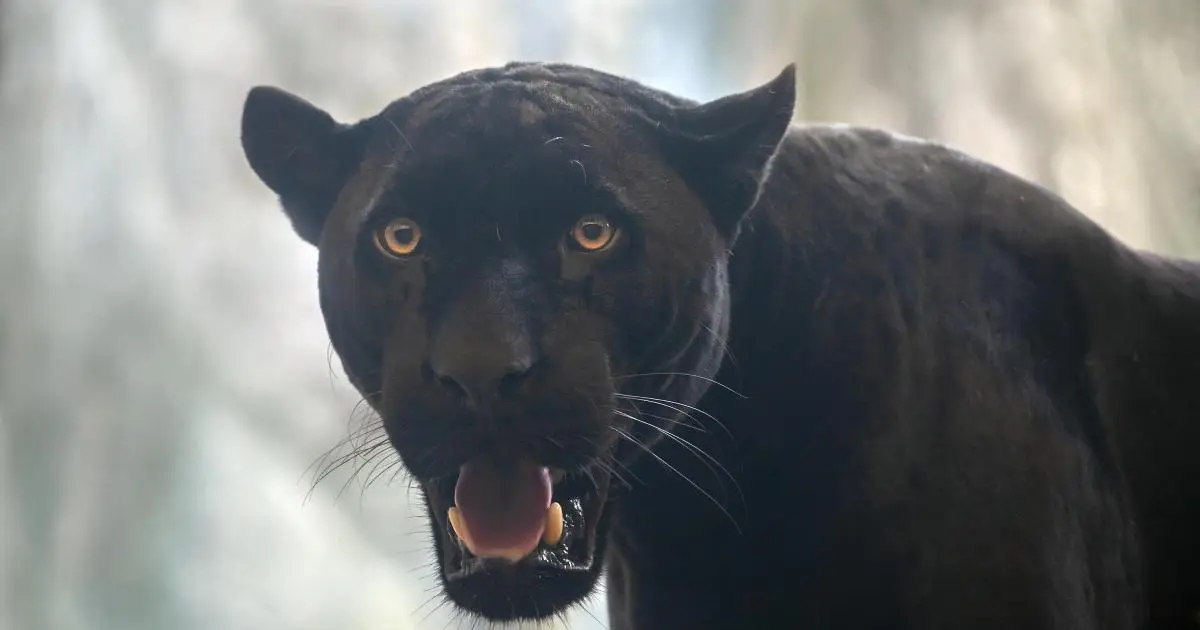
A SPATE of mysterious panther sightings reported by the public across Worcestershire has been revealed in logs disclosed by police.
The reports are possible clues of what big cat enthusiasts see as the decades-long presence of the creatures in the British countryside.
One of the six newly released logs, from April 28, 2024 in Wychavon, states: “A stag had been killed, it had been stripped to the bone (other than the head).
“Suspect it is linked to the panther sightings.”
Two reports in Bromsgrove, one in October 2024 and the second around a year later, describe a panther in a garden.
West Mercia Police attended the first incident, the only time they did so in the dataset going back to 2024, according to the disclosure from the force.
A picture of a panther-like animal taken in Staffordshire which was discovered in zoology files (Image: SWNS)
Another report, from June 16 last year in Worcester, states: “A black panther in the back garden. Big Black cat. Big black thing.”
A fifth report, from Bromsgrove on January 28 last year, reads: “A panther in garden, yellow glowing eyes.”
The most recent log comes from Wyre Forest on February 5 this year, stating: “Black panther – it was not aggressive.
“Just stared then left.”
‘Stealthy predators’
Big cats author and podcaster Rick Minter told Worcester News: “Worcestershire is no different to other parts of Britain in having ongoing descriptions of large cats, described by surprised witnesses, most often at low light and dusk when these predators would be more active.
“The cats described mostly resemble black leopards, but also tan-coloured pumas, and a small proportion of lynx are reported.”
Have big cats somehow adapted to the British countryside? (Image: Stock image)
The podcaster is not alone in believing that big cats are living a secretive existence among us.
Worcestershire Big Cat Group has more than 3,000 members on Facebook, with regular discussions about possible sightings and other apparent evidence of the creatures.
How could big cats have entered the wild?
The possible origins of such beasts have been traced back many decades to a time of lax ownership rules for exotic pets.
Exotic species, including leopards, pumas and panthers, were once popular fashion accessories and could even be bought at Harrods.
Owners were required to keep licences after changes to the law in the following years.
The UK Big Cats research group says that a minority of owners released their unusual pets in the countryside rather than have to hand them over to zoos, have them put down or foot the bills for private enclosures.
Escapees would have had to have bred in the wild for their descendants to be present today.
Researchers also highlight escapes from registered UK zoos, although the information from recent incidents shows the captive animals have been largely accounted for.
The sightings, videos and DNA captured by the public and researchers pose the question of whether the feral beasts have made an incredible evolutionary jump.
The Department of Environment, Food and Rural Affairs has previously said that there is no credible evidence to show any big cat activity.
